Thoughts on Technology and IT

Inspiration for this article is from Meredith Whittaker, the President of Signal who did an interview with Bloomburg;
https://cyberinsider.com/signal-president-warns-ai-agents-are-making-encryption-irrelevant/

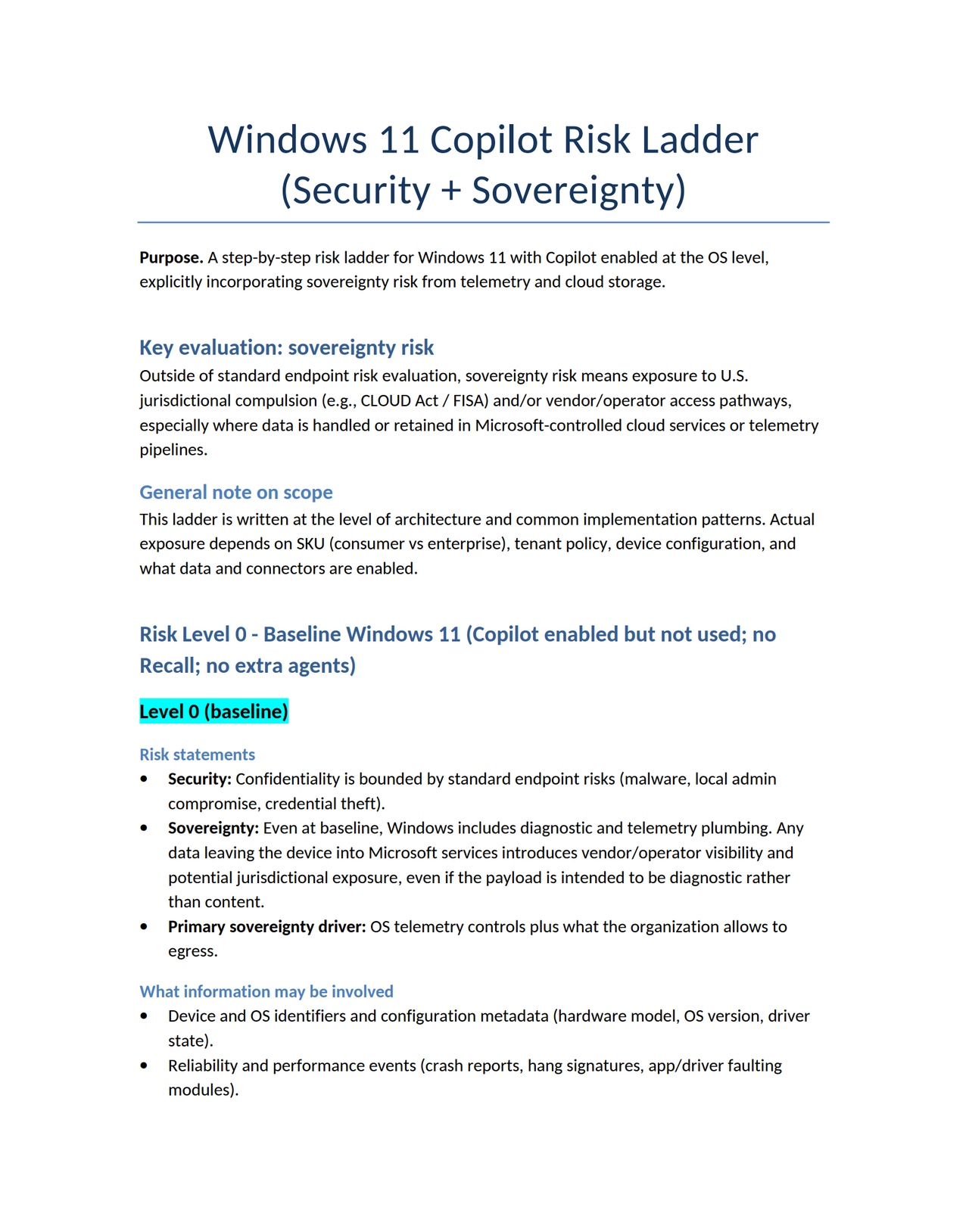
Microsoft seems to be repeating errors from its past in the pursuit of marketable “tools” and “features,” sacrificing safety and privacy for dominance. This is not a new pattern. In the late 1990s and early 2000s, Microsoft made a deliberate decision to integrate Internet Explorer directly into the operating system, not because it was the safest architecture, but because it was a strategic one. The browser became inseparable from Windows, not merely as a convenience, but as a lever to eliminate competition and entrench market control. The result was not only the well documented U.S. antitrust case, but a security disaster of historic scale, where untrusted web content was processed through deeply privileged OS components, massively expanding attack surface across the entire installed base. The record of that era is clear: integration was a business tactic first, and the security consequences were treated as collateral. https://www.justice.gov/
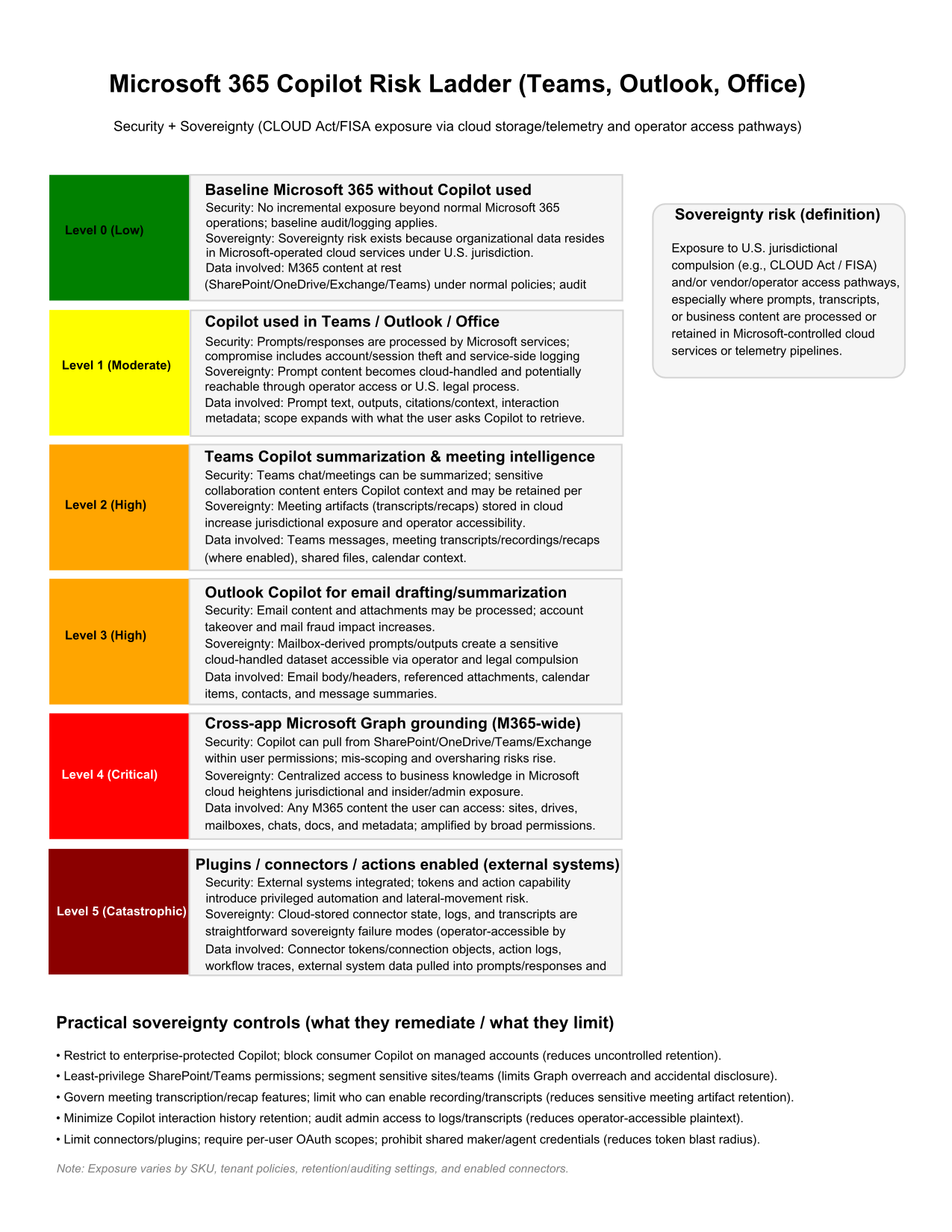
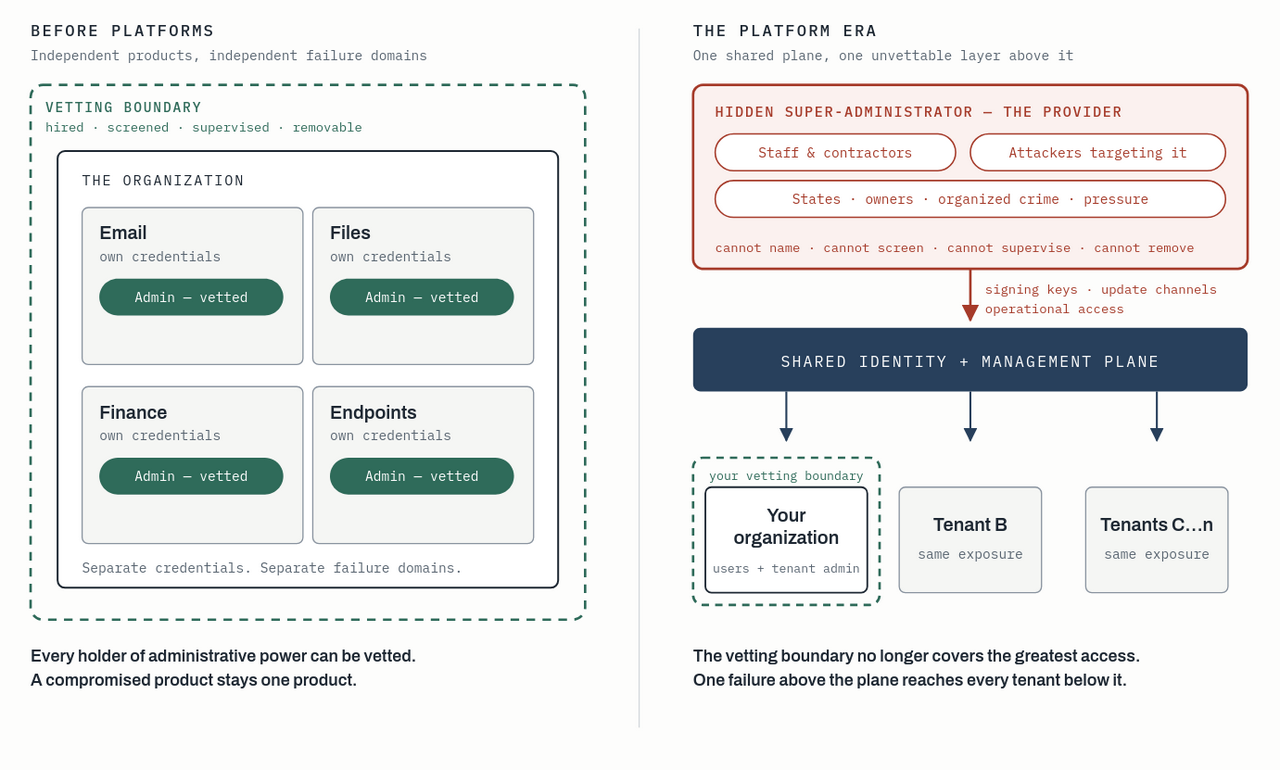
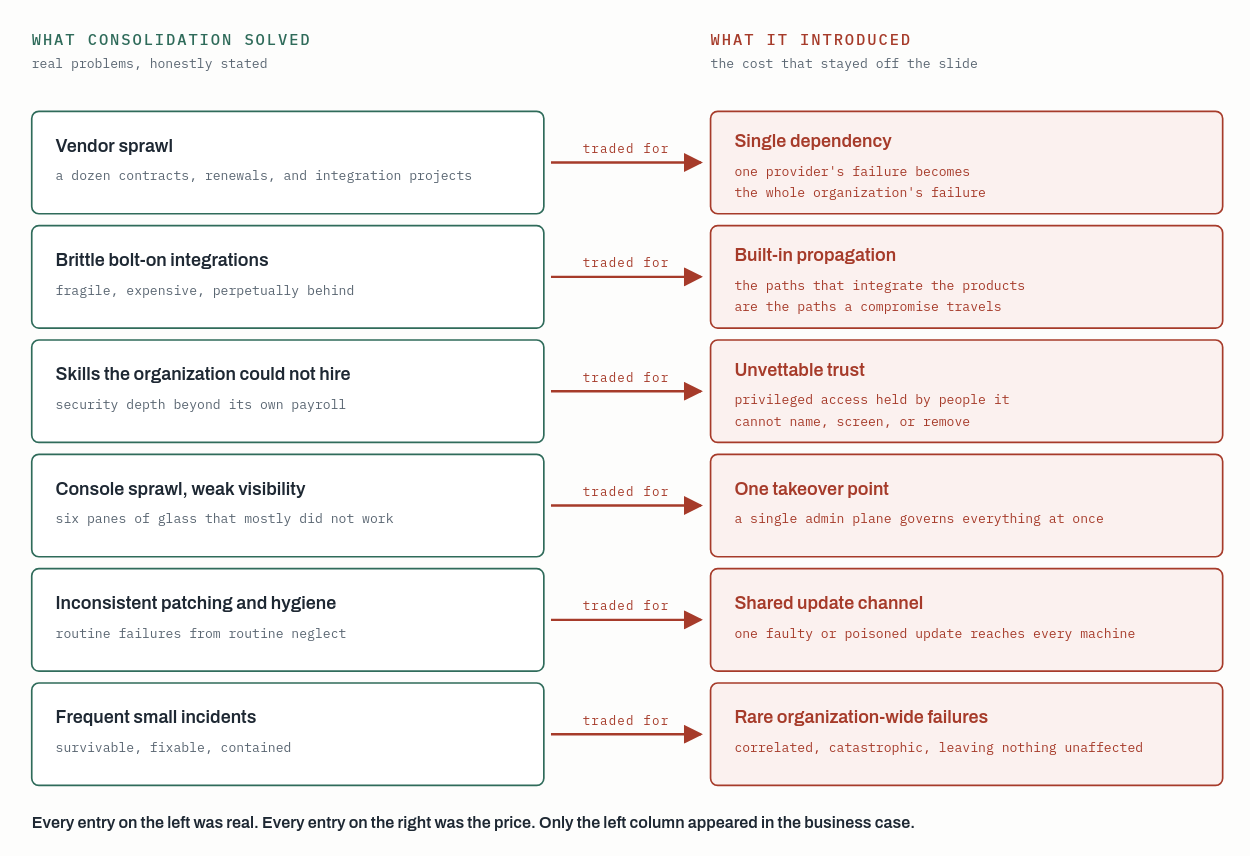
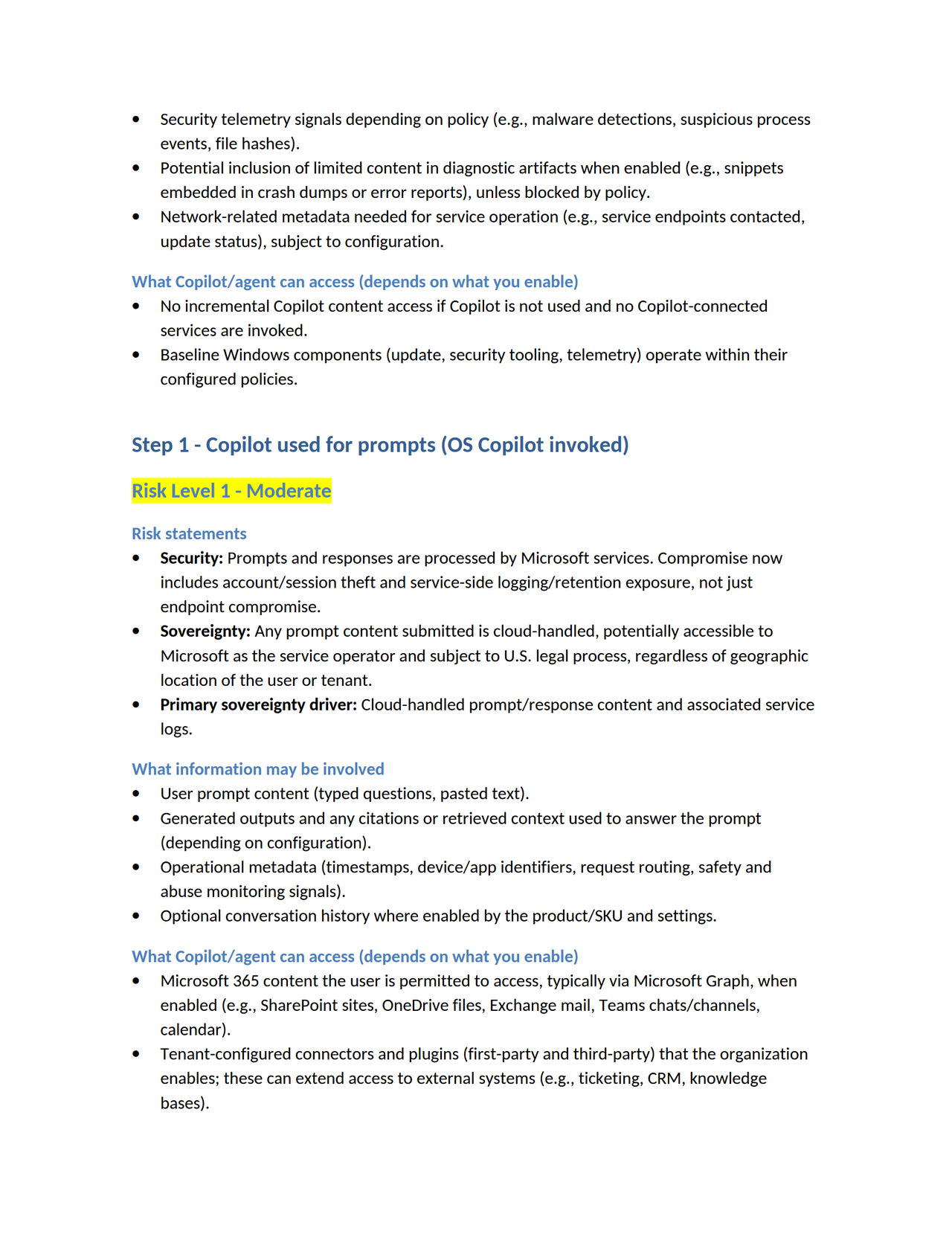
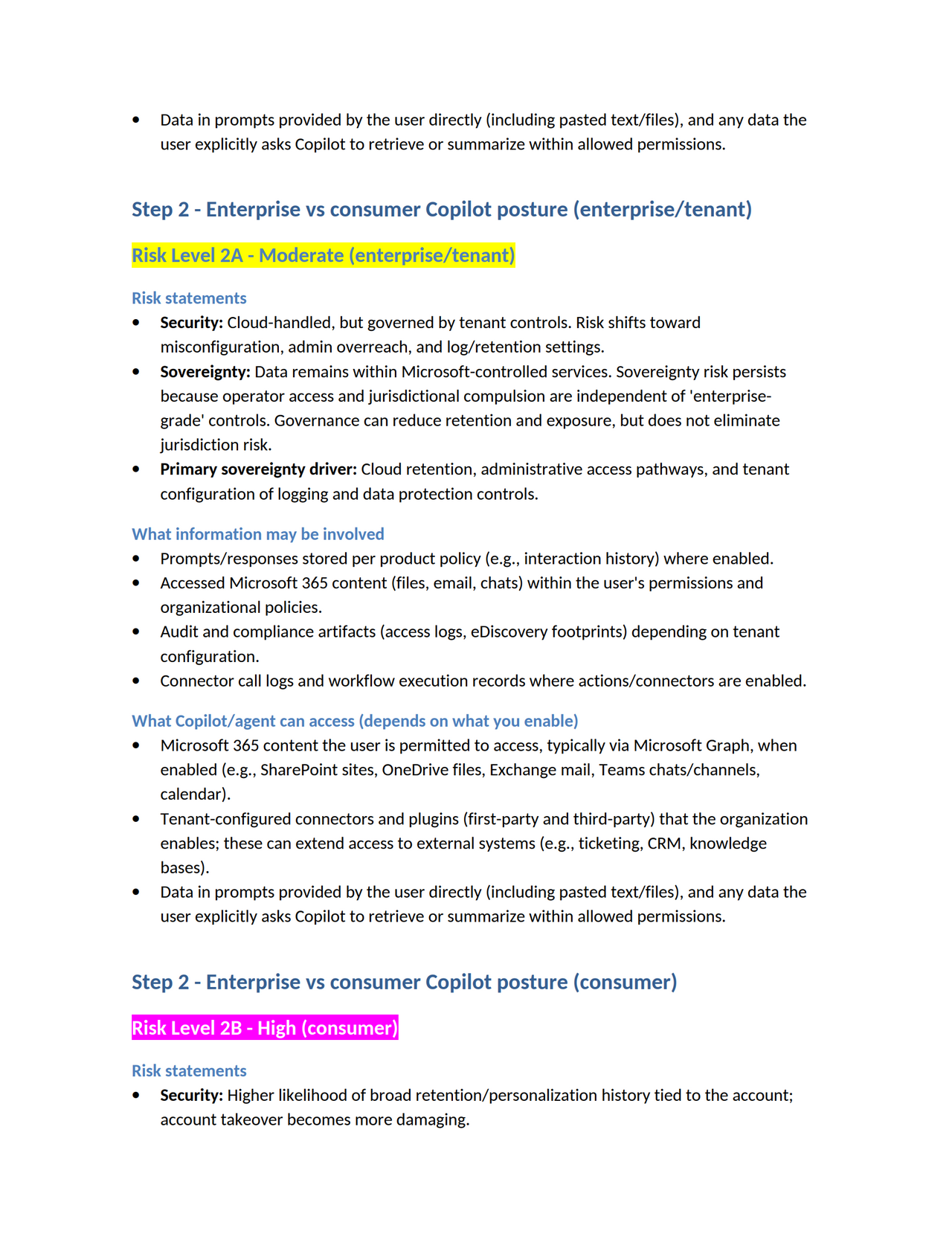
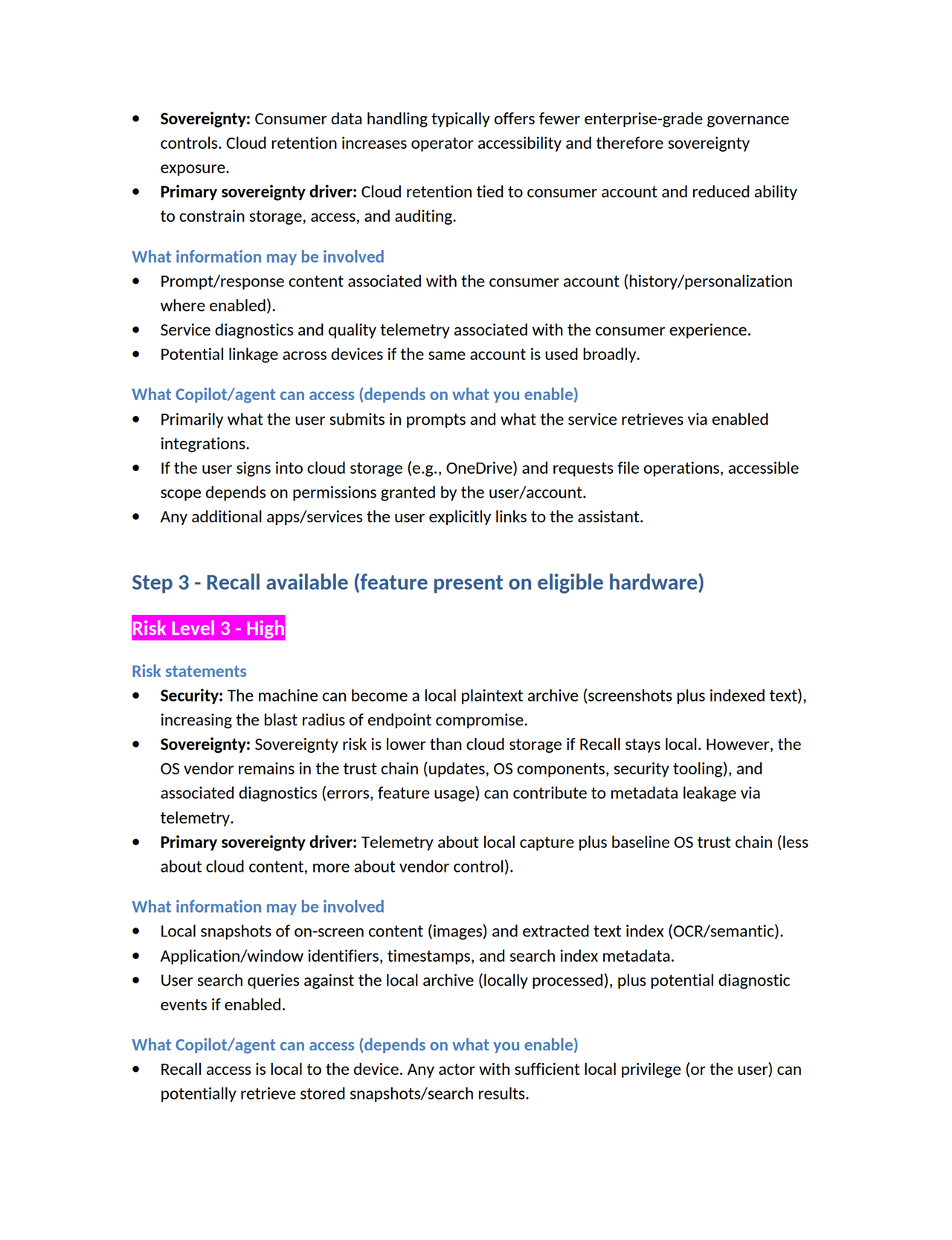
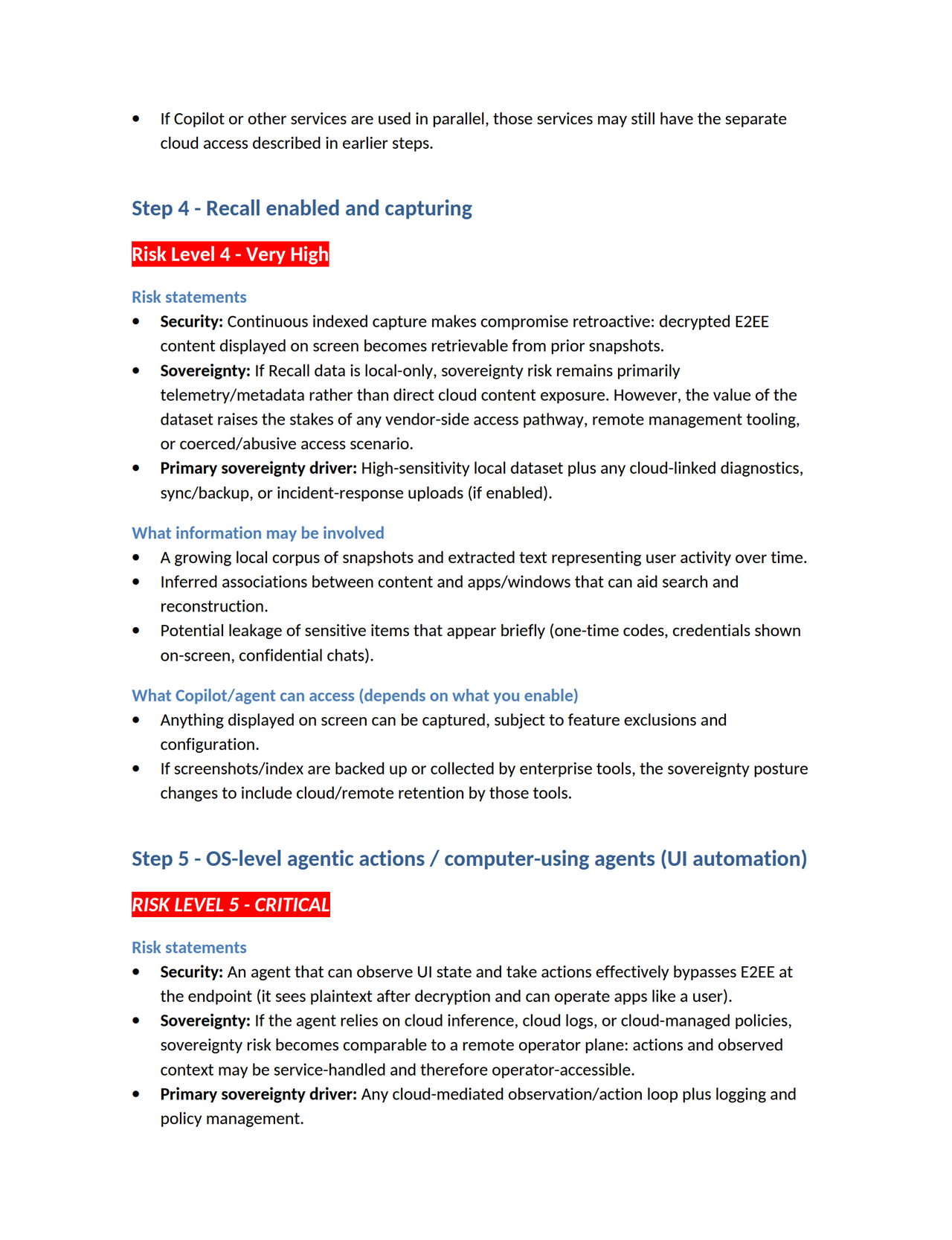
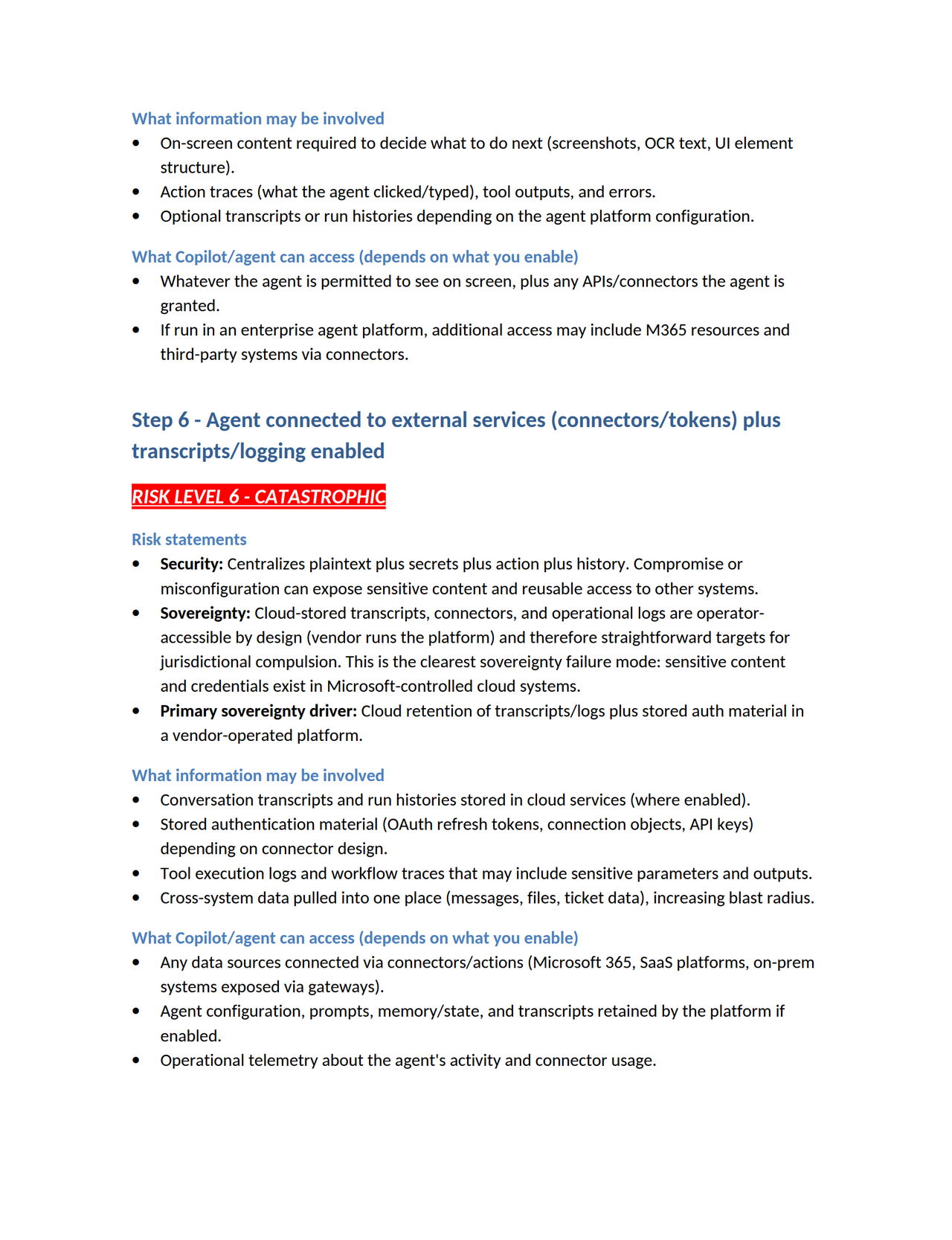
What is alarming is how directly this pattern is repeating today with Copilot. Microsoft is not positioning AI as an optional tool operating at the edge, but as a core operating system and productivity suite layer, embedded into Windows, Teams, Outlook, SharePoint, and the administrative control plane of the enterprise. This is not simply “an assistant.” It is an integrated intermediary designed to observe, retrieve, summarize, and act across the entire organizational data environment, often with persistent state, logging, transcripts, and cloud processing as defaults or incentives. This changes the risk model completely. With IE, the breach potential was largely about code execution. With Copilot, the breach potential becomes enterprise wide data aggregation and action at scale: mailboxes, chats, meetings, documents, connectors, tokens, workflows, all mediated through a vendor operated cloud layer. That is not a minor shift, it is a boundary collapse that turns governance, segmentation, least privilege, and managed security assumptions into fragile hopes rather than enforceable controls. Microsoft’s own documentation shows how rapidly these agent and integration surfaces are becoming enabled by default in Copilot licensed tenants.

https://learn.microsoft.com/

This is where the problem becomes existential for enterprise security. Windows is increasingly being positioned not as a stable, controllable endpoint, but as a marketing platform for AI driven features that require broad access, cloud mediation, and expanded telemetry. The job of IT and security teams becomes an endless exercise in ripping away functionality, disabling default integrations, restricting connectors, limiting retention, and then having difficult conversations with users about why the shiny new feature cannot be trusted in environments with real confidentiality requirements. Instead of enterprise computing becoming simpler and more governable, it becomes more complex, more fragile, and more sovereignty exposed by design. If this trajectory continues, Microsoft risks making Windows less and less defensible as a reasonable secure enterprise platform unless organizations are willing to invest significant effort just to undo what is being bundled in the name of market share.

To help break down the risk, see below:

1. Core Claims by Each Participant

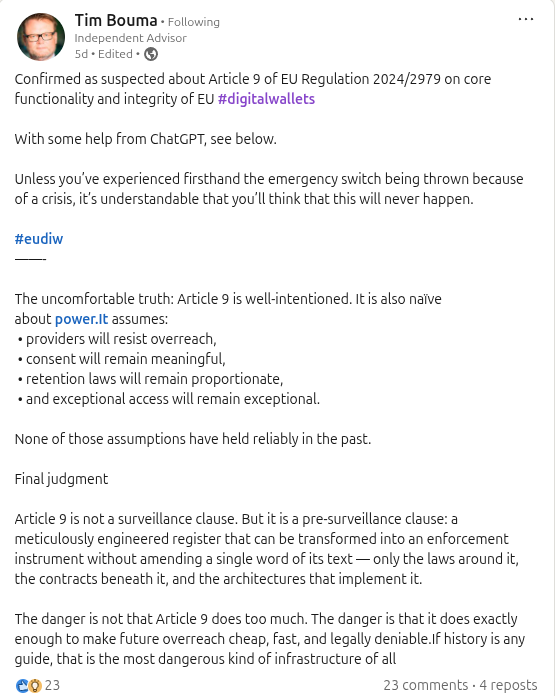
Tim Bouma (Privacy Advocate Perspective): Tim’s analysis of Article 9 centers on its broad logging mandate and the power dynamics it creates. Legally, he notes that Commission Implementing Regulation (EU) 2024/2979 requires wallet providers to record all user transactions with relying parties – even unsuccessful ones – and retain detailed logs (timestamp, relying party ID, data types disclosed, etc.)

. These logs must be kept available for as long as laws require, and providers can access them whenever necessary to provide services, albeit only with the user’s explicit consent (in theory). Tim argues that, while intended to aid dispute resolution and accountability, this effectively enlists wallet providers and relying parties as “surveillance partners” to everything a user does with their digital wallet. He warns that authorities wouldn’t even need to ask the user for evidence – they could simply compel the provider to hand over a “full, cryptographically verifiable log of everything you did,” which is extremely convenient for investigations. In his view, Article 9’s logging rule is well-intentioned but naïve about power: it assumes providers will resist government overreach, that user consent for access will remain meaningful, that data retention laws will stay proportionate, and that “exceptional access” will remain truly exceptional. Technically, Tim emphasizes the security and privacy risks of this approach. A centralized, provider-accessible log of all user activity creates a single, lucrative attack surface and “meticulously engineered register” of personal data. If such logs are breached or misused, it’s not merely a leak of isolated data – it’s a complete, verifiable record of a citizen’s interactions falling into the wrong hands. He notes this design violates fundamental distributed-systems principles by concentrating too much trust and risk in one place. Tim (and those sharing his view) argue that because the EU wallet’s security model relies heavily on the user’s sole control of credentials (“possession as the only security anchor”), the system overcompensates by imposing “pervasive control and logging” to achieve assurance. He suggests this is an unsustainable architecture, especially in multi-hop scenarios (e.g., where credentials flow through several parties). Instead, Tim alludes to cryptographic solutions like Proof of Continuity that could provide accountability without such invasive logging. In short, Tim’s claim is that Article 9 is not explicitly a surveillance measure, but a “pre-surveillance clause” – it lays down the infrastructure that could be rapidly repurposed for surveillance without changing a word of the regulation. The danger, he concludes, is not in what Article 9 does on day one, but that it does “exactly enough to make future overreach cheap, fast, and legally deniable”

Alex DiMarco (Accountability vs. Privacy Mediator): Alex’s comments and follow-up post focus on the tension between legal accountability and user privacy/control. Legally, he acknowledges why Article 9 exists: it “mandates transaction logging to make disputes provable”, i.e. to ensure there’s an audit trail if something goes wrong.

This ties into the EU’s high assurance requirements – a Level of Assurance “High” wallet must enable non-repudiation and forensic audit of transactions in regulated scenarios. Alex recognizes this need for accountability and legal compliance (for instance, proving a user truly consented to a transaction or detecting fraud), as well as obligations like enabling revocation or reports to authorities (indeed Article 9(4) requires logging when a user reports a relying party for abuse). However, he contrasts this with privacy and user agency expectations.

Technically, Alex stresses who holds and controls the logs. He argues that “the moment those logs live outside exclusive user control, ‘personal’ becomes a marketing label”.

In other words, a Personal Digital Wallet ceases to be truly personal if an external provider can peek into or hand over your activity records. He likens a centrally logged wallet to a bank card: highly secure and auditable, yes, but also “deeply traceable” by design. Using Tim’s “Things in Control” lens (a reference to deciding who ultimately controls identity data), Alex frames the issue as: “Who can open the safe, and who gets to watch the safe being opened?”. Here, the “safe” is the log of one’s transactions. If only the user can open it (i.e. if logs are user-held and encrypted), the wallet aligns with privacy ideals; if the provider or others can routinely watch it being opened (provider-held or plaintext logs), then user control is an illusion.

Alex’s core claim is that Article 9’s implementation must be carefully scoped: accountability can’t come at the cost of turning a privacy-centric wallet into just another traceable ID card. He likely points out that the regulation does attempt safeguards – e.g. logs should be confidential and only accessed with user consent – but those safeguards are fragile if, by design, the provider already aggregates all the data.

Technically, Alex hints at solutions like tamper-evident and user-encrypted logs: logs could be cryptographically sealed such that providers cannot read them unless the user allows. He also highlights privacy-preserving features built into the EUDI Wallet framework (and related standards) – for example, selective disclosure of attributes and pseudonymous identifiers for relying parties – which aim to minimize data shared per transaction

. His concern is that extensive logging might undermine these features by creating a backchannel where even the minimal disclosures get recorded in a linkable way. In sum, Alex navigates the middle ground: he validates the legal rationale (dispute resolution, liability, trust framework obligations) but insists on questioning the implementation: Who ultimately controls the data trail? If control tilts away from the user, the wallet risks becoming, in privacy terms, “high-assurance” for authorities but low-assurance for personal privacy.

Steffen Schwalm (Legal Infrastructure Expert Perspective): Steffen – representing experts in digital identity infrastructure and trust services – emphasizes the necessity and manageability of Article 9’s logging from a compliance standpoint. Legally, he likely argues that a European Digital Identity Wallet operating at the highest assurance level must have robust audit and traceability measures. For instance, if a user presents a credential to access a service, there needs to be evidence of who, when, and what data was exchanged, in case of disputes or fraud allegations. This requirement is consistent with long-standing eIDAS and trust-framework practices where audit logs are kept by providers of trust services (e.g. CAs, QSCDs) for a number of years. Steffen might point out that Article 9 was a deliberate policy choice: it was “forced into the legal act by [the European] Parliament” to ensure a legal audit trail, even if some technical folks worried about privacy implications.

The rationale is that without such logs, it would be difficult to hold anyone accountable in incidents – an unacceptable outcome for government-regulated digital identity at scale. He likely references GDPR’s concept of “accountability” and fraud prevention laws as justifications for retaining data. Steffen’s technical stance is that logging can be implemented in a privacy-protective and controlled manner. He would note that Article 9 explicitly requires integrity, authenticity, and confidentiality for logs – meaning logs should be tamper-proof (e.g. digitally signed and timestamped to detect any alteration) and access to their content must be restricted. In practice, providers might store logs on secure servers or hardware security modules with strong encryption, treating them like sensitive audit records. Steffen probably disputes the idea that Article 9 is “surveillance.” In the debate, he might underscore that logs are only accessible under specific conditions: the regulation says provider access requires user consent, and otherwise logs would only be handed over for legal compliance (e.g. a court order). In normal operation, no one is combing through users’ logs at will – they exist as a dormant safety net. He might also highlight that the logged data is limited (no actual credential values, only metadata like “user shared age verification with BankX on Jan 5”), which by itself is less sensitive than full transaction details. Moreover, “selective disclosure” protocols in the wallet mean the user can often prove something (like age or entitlement) without revealing identity; the logs would reflect that a proof was exchanged, but not necessarily the user’s name or the exact attribute value. In Steffen’s view, architecture can reconcile logs with privacy by using techniques such as pseudonymous identifiers, encryption, and access control. For example, the wallet can generate a different pseudonymous user ID for each relying party – so even if logs are leaked, they wouldn’t directly reveal a user’s identity across services. He might also mention that advanced standards (e.g. CEN ISSS or ETSI standards for trust services) treat audit logs as qualified data – to be protected and audited themselves. Finally, Steffen could argue that without central transaction logs, a Level-High wallet might not meet regulatory scrutiny. If a crime or security incident occurs, authorities will ask “what happened and who’s responsible?” – and a provider needs an answer. User-held evidence alone might be deemed insufficient (users could delete or fake data). Thus, from the infrastructure perspective, Article 9’s logging is a lawful and necessary control for accountability and security – provided that it’s implemented with state-of-the-art security and in compliance with data protection law (ensuring no use of logs for anything beyond their narrow purpose).

The debate vividly illustrates the fusion – and tension – between legal mandates and technical architecture in the EU’s digital identity framework. On one hand, legal requirements are shaping the system’s design; on the other, technical architecture can either bolster or undermine the very privacy and accountability goals the law professes.

Legal Requirements Driving Architecture: Article 9 of Regulation 2024/2979 is a prime example of law dictating technical features. The law mandates that a wallet “shall log all transactions” with specific data points.

This isn’t just a policy suggestion – it’s a binding rule that any compliant wallet must build into its software. Why such a rule? Largely because the legal framework (the eIDAS 2.0 regulation) demands a high level of assurance and accountability. Regulators want any misuse, fraud, or dispute to be traceable and provable. For instance, if a user claims “I never agreed to share my data with that service!”, the provider should have a reliable record of the transaction to confirm what actually happened. This hews to legal principles of accountability and auditability – also reflected in GDPR’s requirement that organizations be able to demonstrate compliance with data processing rules. In fact, the European Data Protection Supervisor’s analysis of digital wallets notes that they aim to “strengthen accountability for each transaction” in both the physical and digital world.

So, the law prioritizes a capability (comprehensive logging) that ensures accountability and evidence.

This legal push, however, directly informs the system architecture: a compliant wallet likely needs a logging subsystem, secure storage (potentially server-side) for log data, and mechanisms for retrieval when needed by authorized parties. It essentially moves the EU Digital Identity Wallet away from a purely peer-to-peer, user-centric tool toward a more client-server hybrid – the wallet app might be user-controlled for daily use, but there is a back-end responsibility to preserve evidence of those uses. Moreover, legal provisions like “logs shall remain accessible as long as required by Union or national law” all but ensure that logs can’t just live ephemerally on a user’s device (which a user could wipe at any time). The architecture must guarantee retention per legal timeframes – likely meaning cloud storage or backups managed by the provider or a government-controlled service. In short, legal durability requirements translate to technical data retention implementations.

Architecture Upholding or Undermining Privacy: The interplay gets complicated because while law mandates certain data be collected, other laws (namely, the GDPR and the eIDAS regulation’s own privacy-by-design clauses) insist that privacy be preserved to the greatest extent possible. This is where architectural choices either uphold those privacy principles or weaken them. For example, nothing in Article 9 explicitly says the logs must be stored in plaintext on a central server visible to the provider. It simply says logs must exist and be accessible to the provider when necessary (with user consent).

A privacy-by-design architecture could interpret this in a user-centric way: the logs could be stored client-side (on the user’s device) in encrypted form, and only upon a legitimate request would the user (or an agent of the user) transmit the needed log entries to the provider or authority. This would satisfy the law (the records exist and can be made available) while keeping the provider blind to the data by default. Indeed, the regulation’s wording that the provider can access logs “on the basis of explicit prior consent by the user” suggests an architectural door for user-controlled release.

In practice, however, implementing it that way is complex – what if the user’s device is offline, lost, or the user refuses? Anticipating such issues, many providers might opt for a simpler design: automatically uploading logs to a secure server (in encrypted form) so that they are centrally stored. But if the encryption keys are also with the provider, that veers toward undermining privacy – the provider or anyone who compromises the provider could read the logs at will, consent or not. If, on the other hand, logs are end-to-end encrypted such that only the user’s key can decrypt them, the architecture leans toward privacy, though it complicates on-demand access. This shows how architecture can enforce the spirit of the law or just the letter of it. A design strictly following the letter (log everything, store it somewhere safe) might meet accountability goals but do so in a privacy-weakening way (central troves of personal interaction data). A more nuanced design can fulfill the requirement while minimizing unintended exposure.

Another blending of legal and technical concerns is seen in the scope of data collected. The regulation carefully limits logged information to “at least” certain metadata – notably, it logs what type of data was shared, but not the data itself. For instance, it might record that “Alice’s wallet presented an age verification attribute to Service X on Jan 5, 2026” but not that Alice’s birthdate is 1990-01-01. This reflects a privacy principle (don’t log more than necessary) baked into a legal text. Technically, this means a wallet might store just attribute types or categories in the log. If implemented correctly, that reduces risk: even if logs are accessed, they don’t contain the actual sensitive values – only that certain categories of information were used. However, even metadata can be revealing. Patterns of where and when a person uses their wallet (and what for) can create a rich profile. Here again, architecture can mitigate the risk: for example, employing pseudonyms. Article 14 of the same regulation requires wallets to support generating pseudonymous user identifiers for each relying party. If the logs leverage those pseudonyms, an entry might not immediately reveal the user’s identity – it might say user XYZ123 (a pseudonym known only to that relying party) did X at Service Y. Only if you had additional info (or cooperated with the relying party or had the wallet reveal the mapping) could you link XYZ123 to Alice. This architectural choice – using pairwise unique identifiers – is directly driven by legal privacy requirements (to minimize linkability).

But it requires careful implementation: the wallet and underlying infrastructure must manage potentially millions of pseudonymous IDs and ensure they truly can’t be correlated by outsiders. If designers shortcut this (say, by using one persistent identifier or by letting the provider see through the pseudonyms), they erode the privacy that the law was trying to preserve through that mechanism.

Furthermore, consider GDPR’s influence on architecture. GDPR mandates data protection by design and default (Art. 25) and data minimization (Art. 5(1)©). In the context of Article 9, this means the wallet system should collect only what is necessary for its purpose (accountability) and protect it rigorously. A privacy-conscious technical design might employ aggregation or distributed storage of logs to avoid creating a single comprehensive file per user. For example, logs could be split between the user’s device and the relying party’s records such that no single entity has the full picture unless they combine data during an investigation (which would require legal process). This distributes trust. In fact, one commenter in the debate half-joked that a “privacy wallet provider” could comply in a creative way: “shard that transaction log thoroughly enough and mix it with noise” so that it’s technically compliant but “impossible to use for surveillance”.

This hints at techniques like adding dummy entries or encrypting logs in chunks such that only by collating multiple pieces with user consent do they become meaningful. Such approaches show how architecture can uphold legal accountability on paper while also making unwarranted mass-surveillance technically difficult – thereby upholding the spirit of privacy law.

At the same time, certain architectural decisions can weaken legal accountability if taken to the extreme, and the law pushes back against that. For instance, a pure peer-to-peer architecture where only the user holds transaction evidence could undermine the ability to investigate wrongdoing – a malicious user could simply delete incriminating logs. That’s likely why the regulation ensures the provider can access logs when needed.

The architecture, therefore, has to strike a balance: empower the user, but not solely the user, to control records. We see a blend of control: the user is “in control” of day-to-day data sharing, but the provider is in control of guaranteeing an audit trail (with user oversight). It’s a dual-key approach in governance, if not in actual cryptography.

Finally, the surrounding legal environment can re-shape architecture over time. Tim Bouma’s cautionary point was that while Article 9 itself doesn’t mandate surveillance, it enables it by creating hooks that other laws or policies could later exploit.

For example, today logs may be encrypted and rarely accessed. But tomorrow, a new law could say “to fight terrorism, wallet providers must scan these logs for suspicious patterns” – suddenly the architecture might be adjusted (or earlier encryption requirements relaxed) to allow continuous access. Or contracts between a government and the wallet provider might require that a decrypted copy of logs be maintained for national security reasons. These scenarios underscore that legal decisions (like a Parliament’s amendment or a court ruling) can reach into the technical architecture and tweak its knobs. A system truly robust on privacy would anticipate this by hard-coding certain protections – for instance, if logs are end-to-end encrypted such that no one (not even the provider) can access them without breaking cryptography, then even if a law wanted silent mass-surveillance, the architecture wouldn’t support it unless fundamentally changed. In other words, architecture can be a bulwark for rights – or, if left flexible, an enabler of future policy shifts. This interplay is why both privacy advocates and security experts are deeply interested in how Article 9 is implemented: the law sets the minimum (logs must exist), but the implementation can range from privacy-preserving to surveillance-ready, depending on technical and governance choices.

3. Conclusion: Is “Pre‑Surveillance” a Valid Concern, and Are There Privacy-Preserving Alternatives?

Does Article 9 enable a “pre-surveillance” infrastructure? Based on the debate and analysis above, the criticism is valid to a considerable extent. Article 9 builds an extensive logging capability into the EU Wallet system – essentially an always-on, comprehensive journal of user activities, meticulously detailed and cryptographically verifiable.

By itself, this logging infrastructure is neutral – it’s a tool for accountability. However, history in technology and policy shows that data collected for one reason often gets repurposed. Tim Bouma and privacy advocates cite the uncomfortable truth: if you lay the rails and build the train, someone will eventually decide to run it. In this case, the “rails” are the mandated logs and the legal pathways to access them. Today, those pathways are constrained (user consent or lawful request). But tomorrow, a shift in political winds or a reaction to a crisis could broaden access to those logs without needing to amend Article 9 itself. For example, a Member State might pass an emergency law saying “wallet providers must automatically share transaction logs with an intelligence agency for users flagged by X criteria” – that would still be “as required by national law” under Article 9(6). Suddenly, what was dormant data becomes active surveillance feed, all through a change outside the wallet regulation. In that sense, Article 9’s infrastructure is pre-positioned for surveillance – or “pre-surveillance,” as Tim dubbed it. It’s akin to installing CCTV cameras everywhere but promising they’ll remain off; the capability exists, awaiting policy to flip the switch. As one commenter noted, the danger is that Article 9 “does exactly enough to make future overreach cheap, fast, and legally deniable”.

Indeed, having a complete audit trail on every citizen’s wallet use ready to go vastly lowers the barrier for state surveillance compared to a system where such data didn’t exist or was decentralized.

It’s important to acknowledge that Article 9 was not written as a mass surveillance measure – its text and the surrounding eIDAS framework show an intent to balance accountability with privacy (there are consent requirements, data minimization, etc.).

But critics argue that even a well-intended logging mandate can erode privacy incrementally. For example, even under current rules, consider the concept of “voluntary” consent for provider access. In practice, a wallet provider might make consent to logging a condition for service – effectively forcing users to agree. Then “consent” could be used to justify routine analytics on logs (“to improve the service”) blurring into surveillance territory. Additionally, logs might become a honeypot for law enforcement fishing expeditions or for hackers if the provider’s defenses fail. The mere existence of a rich data trove invites uses beyond the original purpose – a phenomenon the privacy community has seen repeatedly with telecom metadata, credit card records, etc. David Chaum’s 1985 warning rings true: the creation of comprehensive transaction logs can enable a “dossier society” where every interaction can be mined and inferred.

Article 9’s logs, if not tightly guarded and purpose-limited, could feed exactly that kind of society (e.g. linking a person’s medical, financial, and social transactions to profile their life). So, labeling the infrastructure as “pre-surveillance” is not hyperbole – it’s a recognition that surveillance isn’t just an act, but also the capacities that make the act feasible. Article 9 unquestionably creates a capacity that authoritarian-leaning actors would find very useful. In sum, the critique is valid: Article 9 lays down an architecture that could facilitate surveillance with relative ease. The degree of risk depends on how strictly safeguards (legal and technical) are implemented and upheld over time, but from a structural standpoint, the foundation is there.

Can user-controlled cryptographic techniques satisfy accountability without provider-readable logs?

Yes – at least in theory and increasingly in practice – there are strong technical approaches that could reconcile the need for an audit trail with robust user privacy and control. The heart of the solution is to shift from provider-trusted logging to cryptographic, user-trusted evidence. For example, instead of the provider silently recording “Alice showed credential X to Bob’s Service at 10:00,” the wallet itself could generate a cryptographically signed receipt of the transaction and give it to Alice (and perhaps Bob) as proof. This receipt might be a zero-knowledge proof or a selectively disclosed token that confirms the event without revealing extraneous data. If a dispute arises, Alice (or Bob) can present this cryptographic proof to an arbitrator or authority, who can verify its authenticity (since it’s signed by the wallet or issuing authority) without the provider ever maintaining a dossier of all receipts centrally. In this model, the user (and relevant relying party) hold the logs by default – like each keeps a secure “transaction receipt” – and the provider is out of the loop unless brought in for a specific case. This user-centric logging can satisfy legal accountability because the evidence exists and is verifiable (tamper-evident), but it doesn’t reside in a big brother database.

One concrete set of techniques involves end-to-end encryption (E2EE) and client-side logging. For instance, the wallet app could log events locally in an encrypted form where only the user’s key can decrypt. The provider might store a backup of these encrypted logs (to meet retention rules and in case the user loses their device), but without the user’s consent or key, the entries are gibberish. This way, the provider fulfills the mandate to “ensure logs exist and are retained,” but cannot read them on a whim – they would need the user’s active cooperation or a lawful process that compels the user or a key escrow to unlock them.

Another approach is to use threshold cryptography or trusted execution environments: split the ability to decrypt logs between multiple parties (say, the user and a judicial authority) so no single party (like the provider) can unilaterally surveil. Only when legal conditions are met would those pieces combine to reveal the plaintext logs. Such architectures are complex but not unprecedented in high-security systems.

Zero-knowledge proofs (ZKPs) are especially promising in this domain. ZKPs allow a user to prove a statement about data without revealing the data itself. For digital identity, a user could prove “I am over 18” or “I possess a valid credential from Issuer Y” without disclosing their name or the credential’s details. The EU wallet ecosystem already anticipates selective disclosure and ZKP-based presentations (the ARF even states that using a ZKP scheme must not prevent achieving LoA High).

When a user authenticates to a service using a ZKP or selective disclosure, what if the “log” recorded is also a kind of zero-knowledge attestations? For example, a log entry could be a hash or commitment to the transaction details, time-stamped and signed, possibly even written to a public ledger or transparency log. This log entry by itself doesn’t reveal Alice’s identity or what exactly was exchanged – it might just be a random-looking string on a public blockchain or an audit server. However, if later needed, Alice (or an investigator with the right keys) can use that entry to prove “this hash corresponds to my transaction with Service X, and here is the proof to decode it.” In effect, you get tamper-evident, append-only public logs (fulfilling integrity and non-repudiation) but privacy is preserved because only cryptographic commitments are public, not the underlying personal data. In the event of an incident, those commitments can be revealed selectively to provide accountability. This is analogous to Certificate Transparency in web security – every certificate issuance is logged publicly for audit, but the actual private info isn’t exposed unless you have the certificate to match the log entry.

Another concept raised in the debate was “Proof of Continuity.” While the term sounds abstract, it relates to ensuring that throughout a multi-hop identity verification process, there’s a continuous cryptographic link that can be audited.

Instead of relying on a central log to correlate steps, each step in a user’s authentication or credential presentation could carry forward a cryptographic proof (a token, signature, or hash) from the previous step. This creates an unbroken chain of evidence that the user’s session was valid without needing a third party to log each step. If something goes wrong, investigators can look at the chain of proofs (provided by the user or by intercepting a public ledger of proofs) to see where it failed, without having had a central server logging it in real-time. In essence, authority becomes “anonymous or accountable by design, governed by the protocol rather than external policy,” and the “wallet becomes a commodity”.

That is, trust is enforced by cryptographic protocol (you either have the proofs or you don’t) not by trusting a provider to have recorded and later divulged the truth. This design greatly reduces the privacy impact because there isn’t a standing database of who did what – there are just self-contained proofs held by users and maybe published in obfuscated form.

Of course, there are challenges with purely user-controlled accountability. What if the user is malicious or collusive with a fraudulent party? They might refuse to share logs or even tamper with their device-stored records (though digital signatures can prevent tampering). Here is where a combination of approaches can help: perhaps the relying parties also log receipts of what they received, or an independent audit service logs transaction hashes (as described) for later dispute. These ensure that even if one party withholds data, another party’s evidence can surface. Notably, many of these techniques are being actively explored in the identity community. For example, some projects use pairwise cryptographic tokens between user and service that can later be presented as evidence of interaction, without a third party seeing those tokens in the moment. There are also proposals for privacy-preserving revocation systems (using cryptographic accumulators or ZK proofs) that let someone verify a credential wasn’t revoked at time of use without revealing the user’s identity or requiring a central query each time.

All these are ways to satisfy the intent of logging (no one wants an undetectable fraudulent transaction) without the side effect of surveilling innocents by default.

In the end, it’s a matter of trust and control: Article 9 as written leans on provider trust (“we’ll log it, but trust us and the law to only use it properly”). Privacy-preserving architectures lean on technical trust (“we’ve designed it so it’s impossible to abuse the data without breaking the crypto or obtaining user consent”).

Many experts argue that, especially in societies that value civil liberties, we should prefer technical guarantees over policy promises. After all, a robust cryptographic system can enforce privacy and accountability simultaneously – for example, using a zero-knowledge proof, Alice can prove she’s entitled to something (accountability) and nothing more is revealed (privacy).

This approach satisfies regulators that transactions are legitimate and traceable when needed, but does not produce an easily exploitable surveillance dataset.

To directly answer the question: Yes, user-controlled cryptographic techniques can, in principle, meet legal accountability requirements without requiring logs readable by the provider. This could involve the wallet furnishing verifiable but privacy-protecting proofs of transactions, implementing end-to-end encrypted log storage that only surfaces under proper authorization, and leveraging features like pseudonymous identifiers and selective disclosure that are already part of the EUDI Wallet standards.

Such measures ensure that accountability is achieved “on demand” rather than through continuous oversight. The legal system would still get its evidence when legitimately necessary, but the everyday risk of surveillance or breach is dramatically reduced. The trade-off is complexity and perhaps convenience – these solutions are not as straightforward as a plain server log – but they uphold the fundamental promise of a digital identity wallet: to put the user in control. As the EDPS TechDispatch noted, a well-designed wallet should “reduce unnecessary tracking and profiling by identity providers” while still enabling reliable transactions.

User-controlled logs and cryptographic proofs are exactly the means to achieve that balance of privacy and accountability by design.

Sources:

·      Commission Implementing Regulation (EU) 2024/2979, Article 9 (Transaction logging requirements)[23][4]

·      Tim Bouma’s analysis of Article 9 and its implications (LinkedIn posts/comments, Dec 2025)[7][6][9]

·      Alex DiMarco’s commentary on the accountability vs privacy fault line in Article 9 (LinkedIn post, Jan 2026)[14][39]

·      Expert debate contributions (e.g. Ronny K. on legislative intent[20] and Andrew H. on creative compliance ideas[29]) illustrating industry perspectives.

·      European Data Protection Supervisor – TechDispatch on Digital Identity Wallets (#3/2025), highlighting privacy-by-design measures (pseudonyms, minimization) and the need to ensure accountability for transactions[36][24].

·      Alvarez et al., Privacy Evaluation of the EUDIW ARF (Computers & Security vol.160, 2026) – identifies linkability risks in the wallet’s design and suggests PETs like zero-knowledge proofs to mitigate such risks[24][38].

[1] [5] [6] [7] [8] [9] [10] [11] [12] [13] [20] [24] [28] [29] [31] [36] [37] [38] EU Digital Identity Wallet Regulations: 2024/2979 Mandates Surveillance | Tim Bouma posted on the topic | LinkedIn

https://www.linkedin.com/posts/trbouma_european-digital-identity-wallet-european-activity-7412499259012325376-E5Bp

[2] [3] [4] [15] [18] [19] [21] [22] [23] [25] [26] [30] [32] [33] Understand the EU Implementing Acts for Digital ID | iGrant.io DevDocs

https://docs.igrant.io/regulations/implementing-acts-integrity-and-core-functions/

[14] [16] [17] [39] Who is in control – the debate over article 9 for the EU digital wallet | Alex DiMarco

https://www.linkedin.com/posts/dimarcotech-alex-dimarco_who-is-in-control-the-debate-over-article-activity-7414692978964750336-ohfV

[27] [34] #digitalwallets #eudiw | Tim Bouma | 24 comments

https://www.linkedin.com/posts/trbouma_digitalwallets-eudiw-activity-7412618695367311360-HiSp

[35] ANNEX 2 – High-Level Requirements – European Digital Identity Wallet

https://eudi.dev/1.9.0/annexes/annex-2/annex-2-high-level-requirements/

Tim Bouma posted the following on linkedin:

https://www.linkedin.com/posts/trbouma_digitalwallets-eudiw-activity-7412618695367311360-HiSp

The thread kicked off with Tim Bouma doing what good provocateurs do: he didn’t argue that Article 9 is surveillance, he argued it is “pre-surveillance” infrastructure. His point wasn’t about intent. It was about power—providers don’t reliably resist overreach, consent degrades, retention expands, and “exceptional access” becomes normal. The claim is simple: build a meticulous transaction register now, and future governments won’t need to amend the text to weaponize it; they’ll just change the surrounding law, contracts, and implementation defaults.

Other posters pushed back hard and stayed on the privacy as advertised position. Article 9, was argued, mandates logging for accountability and dispute resolution, not monitoring. Access and use are only with user consent. Without a transaction history, the user can’t prove that a relying party asked for too much, or that a wallet provider failed them—so “privacy” becomes a marketing chimera because the user is forced to trust the provider’s story. In other words: the log is the user’s evidence mechanism, not the state’s surveillance feed.

That’s where the conversation split into two different definitions of privacy. One side treated privacy as governance: consent gates, regulated actors, and legal process. The other (in my responses ) treated privacy as architecture: if the system can produce a readable activity trail outside the user’s exclusive key control, then “consent” is a policy dial that can be turned, bundled, pressured, or redefined—especially once you add backups, multi-device sync, support workflows, and retention “as required by law.” Tim then distilled it to a meme (“You’re sheltering logs from the state, aren’t you?”)

, and the response escalated the framing: regulated environments can’t be “pure self-sovereign,” and critics who resist logging end up binding users to providers by removing their ability to evidence what happened.

That is the real disagreement: not whether accountability matters, but whether accountability can be delivered without turning transaction metadata into an asset that naturally wants to be centralized, retained, and compelled. And that is exactly why the safe analogy matters.

Article 9 is a perfect example of old ideas of accountability and tracking of transactions failing to understand what privacy is. If data is not E2EE and the owner of the data does not have full and exclusive control of the key, it is not private – period.

This is best illustrated by looking at the digital wallet as a safe. If you buy a safe you expect it to be a solid and trustworthy mechanism to protect your private and precious items. Things that go in the safe do not lose their characteristics or trustworthiness because they are in the safe, and their value travels with the item. The safe provides the individual with control “holding the keys” the confidence (trusting the safe builder did a good job and didn’t sneak in any “back doors” for access or a hidden camera transmitting all the items and action from the safe to themselves or a third party. If any of these things were present it would make the safe completely untrustworthy. For a digital wallet, the analogy holds up very well and the parallels are accurate.

This concern is really a question about what you trust. The default assumption behind an “outside verifiable record” is that an external party (a provider, a state system, a central log store) is inherently more trustworthy than an individual or a purpose-built trust infrastructure. That is a fallacy. The most trustworthy “record” is not a third party holding your data; it is an infrastructure designed so that nobody can quietly rewrite history—not the user, not the provider, not the relying party—while still keeping the content private.

Modern systems can do this without leaking logs in the clear:

  • Tamper-evident local ledger (append-only): The wallet writes each event as an append-only entry and links entries with cryptographic hashes (a “hash chain”). If any past entry is altered, the chain breaks. The wallet can also bind entries to a secure hardware root (secure enclave/TPM) so the device can attest “this ledger hasn’t been tampered with.” The evidence is strong without requiring a provider-readable copy.
  • Signed receipts from the relying party: Each transaction can produce a receipt that the relying party signs (or both parties sign). The user stores that receipt locally. In a dispute, the user presents the signed receipt: it proves what the relying party requested and what was presented, without requiring a central authority to have been watching. The relying party cannot plausibly deny its own signature.
  • Selective disclosure and zero-knowledge proofs: Instead of exporting a full log, the wallet can reveal only what is needed: e.g., “On date X, relying party Y requested attributes A and B,” plus a proof that this claim corresponds to a valid ledger entry. Zero-knowledge techniques can prove integrity (“this entry exists and is unmodified”) without exposing unrelated entries or a full activity timeline.
  • Public timestamping without content leakage: If you want third-party verifiability without third-party readability, the wallet can periodically publish a tiny commitment (a hash) to a public timestamping service or transparency log. That commitment reveals nothing about the transactions, but it proves that “a ledger in this state existed at time T.” Later, the user can show that a specific entry was part of that committed state, again without uploading the full ledger.

Put together, this produces the property Article 9 is aiming for—users can evidence what happened—without creating a centralized, provider-accessible dossier. Trust comes from cryptography, secure attestation, and counterparty signatures, not from handing a readable transaction record to an outside custodian. The user retains exclusive control of decryption keys and decides what to disclose, while verifiers still get high-assurance proof that the disclosed record is authentic, complete for the scope claimed, and untampered.

The crux of the matter is control, and Tim Bouma’s “Things in Control” framing is the cleanest way to see it: digital objects become legally meaningful not because of their content or because a registry watches them, but because the system enforces exclusive control—the ability to use, exclude, and transfer (see Tim Bouma's Newsletter). That is exactly why the safe analogy matters. The debate is not “should a wallet be trusted,” it’s “who owns and can open the safe—and who gets to observe and retain a record of every time it is opened.” The instinct behind Article 9-style thinking is to post a guard at the door: to treat observation and third-party custody of logs as the source of truth, rather than trusting the built architecture to be trustworthy by design (tamper-evident records, receipts, verifiable proofs, and user-held keys). That instinct embeds a prior assumption that the architecture is untrustworthy and only an external custodian can be trusted; in the best case it is fear-driven and rooted in misunderstanding what modern cryptography can guarantee, and in the worst case it is deliberate—an attempt to normalize overreach and shift the power relationship by reducing individual autonomy while still calling the result “personal” and “user-controlled.”

For use in Canadian Sovereign public institutions

What PacketFence Provides

PacketFence is an open-source network access control (NAC) platform that delivers enterprise-grade access management without commercial licensing lock-in. It provides full lifecycle management of wired, wireless, and VPN network access through 802.1X authentication, captive portals, MAC-authentication, and device profiling.

It integrates with RADIUS and directory back-ends (LDAP, AD), enforces VLAN-based or inline network segmentation, and can isolate non-compliant devices for remediation. PacketFence’s captive-portal design simplifies onboarding for BYOD, guests, and institutional devices, while its flexible architecture supports multi-site, multi-tenant deployments—ideal for large, decentralized institutions such as universities or regional public bodies.

Beyond enforcement, PacketFence includes monitoring, reporting, and posture-validation functions that help security teams meet compliance requirements for acceptable-use and network-segmentation policies.

The Value Provided by the Company Behind It

PacketFence is maintained by Inverse, now part of Akamai Technologies. Inverse built PacketFence as an enterprise-ready, GPL-licensed system and continues to provide professional support, clustering expertise, and integration services.

The vendor’s core value is the combination of open-source transparency and enterprise-grade reliability. Through Akamai, institutions can purchase professional support, consulting, and managed services for PacketFence while retaining full control of source code and deployment. This dual model—open-source flexibility with optional vendor-backed assurance—lowers risk and long-term operating costs compared to closed commercial NAC products.

How PacketFence Remains Sovereign

For Canadian public institutions governed by FIPPA or equivalent legislation, sovereignty and residency are key. PacketFence excels here because it can be deployed entirely on-premises, with no mandatory cloud dependency.

All RADIUS, policy, and authentication data can stay within Canadian-controlled infrastructure. Fingerbank, the device-fingerprinting component, can operate in local-only mode, keeping hardware identifiers and device fingerprints within the local database.

This means a university, municipality, or agency can meet privacy and data-sovereignty obligations while retaining full control of authentication logs, certificates, and network policies. The result is a sovereign NAC platform that aligns naturally with the “trusted network” and “sovereign infrastructure” mandates emerging across provincial and federal sectors.

Integration with Cambium and Aruba

PacketFence integrates cleanly with major Canadian-market access vendors such as Cambium Networks and Aruba.

  • Cambium: PacketFence supports VLAN assignment, RADIUS authentication, and guest-portal redirection through Cambium’s cnMaestro and enterprise Wi-Fi controllers. This pairing provides cost-effective public-sector Wi-Fi with open management and NAC enforcement under local control.
  • Aruba: Integration uses standard 802.1X and RADIUS attributes, with PacketFence handling role-based VLAN mapping and Aruba controllers enforcing segmentation. Aruba’s flexible switch and AP lineups fit neatly into PacketFence’s multi-vendor enforcement model, offering smooth interoperability for mixed infrastructures.

These integrations allow institutions to modernize access control without changing their switching or wireless ecosystems, reducing capital overhead while maintaining secure segmentation.

Large-Scale and Public Deployments

Public evidence of PacketFence adoption continues to grow, particularly in the education sector where transparency and sovereignty matter most. Below is a verified list of active deployments and references across Canada, the United States, and Europe.

Delta School District (BC)

Help page referencing PacketFence portals

https://www.deltasd.bc.ca/resources/district-wifi/

Keyano College (AB)

Active PacketFence portal

https://packetfence.keyano.ca/access

Seattle Pacific University

Vendor testimonial—“over 8 000 registered devices, 200+ switches, 400 APs”

https://www.inverse.ca/

Albany State University

User guide and live status portal

https://packetfence.asurams.edu/status

FX Plus (Falmouth & Exeter Campuses)

Live PacketFence portal

https://packetfence.fxplus.ac.uk/status

Queen’s College Oxford

IT blog documenting PacketFence rollout

https://it.queens.ox.ac.uk/2011/11/04/mt2011-4th-week-packetfence/

Why It Fits Canadian Public Institutions

Canadian universities, colleges, and municipalities face unique constraints: compliance under FIPPA, financial transparency, mixed-vendor environments, and the need for sovereign data governance. PacketFence’s open architecture, self-hosted control plane, and native integration with widely deployed access hardware make it an ideal choice.

It avoids the CLOUD Act exposure inherent in U.S.-hosted NAC offerings and aligns with provincial mandates for on-premises or Canadian-hosted data. Its open-source licensing also simplifies procurement under public-sector software guidelines, removing per-endpoint licensing costs and ensuring full audibility of code and data handling.

Closing Thoughts

PacketFence delivers a proven, scalable, and sovereign alternative to commercial NAC systems. For public institutions balancing compliance, budget, and independence, it provides both control and confidence. Backed by Inverse and Akamai’s professional expertise, and built on open standards that integrate cleanly with Cambium and Aruba ecosystems, it stands out as the pragmatic choice for Canadian sovereign infrastructure.

Sources and Documentation

You cannot make an Acrobat Pro subscription fully sovereign. Identity, licensing, and the Admin Console rely on Adobe IMS services with data stored in the U.S. You can harden it to “desktop-only, no cloud, minimal egress,” and run it for long offline windows. Below is a possible deployable plan with controls.

Baseline

  1. Identity: Use Federated ID with SAML SSO. Do not use Adobe IDs. Enforce domain claims and profile separation.

  2. Track: Package Acrobat Classic via Named User Licensing to reduce service exposure by design.

  3. Services: Disable Acrobat Studio services, Acrobat AI, and cloud storage at the product-profile level.

  4. Desktop policy: Lock services off with registry keys via the Customization Wizard or GPO.

  5. Network: Block all Acrobat/CC endpoints except the small set you allow during controlled sign-in and update windows. Explicitly block AI endpoints.

  6. Updates: Use internal update flows. Prefer RUM plus a maintenance window. If you need a mirror, stand up AUSST.

  7. Offline windows: Plan for 30 days offline plus a 99-day grace if needed. After that, devices must phone home.

Options

A. NUL + Classic track (recommended)

  • Services reduced by default; then disable the rest in Admin Console and via registry. Least network surface while keeping subscription entitlements.

B. NUL + Continuous track

  • More frequent updates and features. Lock down services with the same Admin Console and registry controls. Larger test burden.

C. Replace e-sign

  • If you require e-sign with Canadian residency, use a Canadian-resident e-sign service in place of Acrobat Sign. OneSpan Sign offers Canadian data centres and on-prem options; Syngrafii operates Canadian instances.

Configuration “How”

1) Admin Console

  • Identity: create Federated ID directory and enable SSO with your IdP. Disable Adobe ID use for org domains.
  • Package: create Named User Licensing package for Acrobat Classic.
  • Services: for the Acrobat product profile set:
    • PDF Services = Off, Acrobat AI = Off, Adobe Express = Off for “desktop-only” posture.
  • Self-service: disable self-service install and updates. You will push updates.

2) Desktop hardening (deploy via RMM tool)

Set these registry keys (Acrobat Pro “DC” shown; adjust version path as needed): HKLM\SOFTWARE\Policies\Adobe\Acrobat\DC\FeatureLockdown

  • bUpdater=0 (disables in-product updates) HKLM\SOFTWARE\Policies\Adobe\Acrobat\DC\FeatureLockdown\cServices
  • bToggleAdobeDocumentServices=1 (disable Document Cloud services)
  • bToggleAdobeSign=1 (disable Send for Signature)
  • bTogglePrefsSync=1 (disable preference sync)
  • bToggleFillSign=1 (disable Fill & Sign if required)
  • bToggleSendAndTrack=1 (disable Send & Track)
  • bToggleWebConnectors=1 (disable Dropbox/Google Drive/OneDrive connectors) Optional: bDisableSharePointFeatures=1 under …\cSharePoint.

3) Network controls

  • Permit only during maintenance windows:
    • Licensing activation: *.licenses.adobe.com
    • IMS auth and Admin Console set you allow temporarily per window. Keep AI and “sensei” endpoints blocked. Endpoints change; re-baseline on each release.

4) Updates

  • Use Remote Update Manager (RUM) to push security updates on schedule from your admin host. Pair with WSUS/SCCM/Intune as you prefer.
  • If you need zero egress during patch windows, host packages internally and run RUM against that mirror or deploy prebuilt packages. AUSST provides an internal update server pattern.

Functionally? Yes – and it is massive.

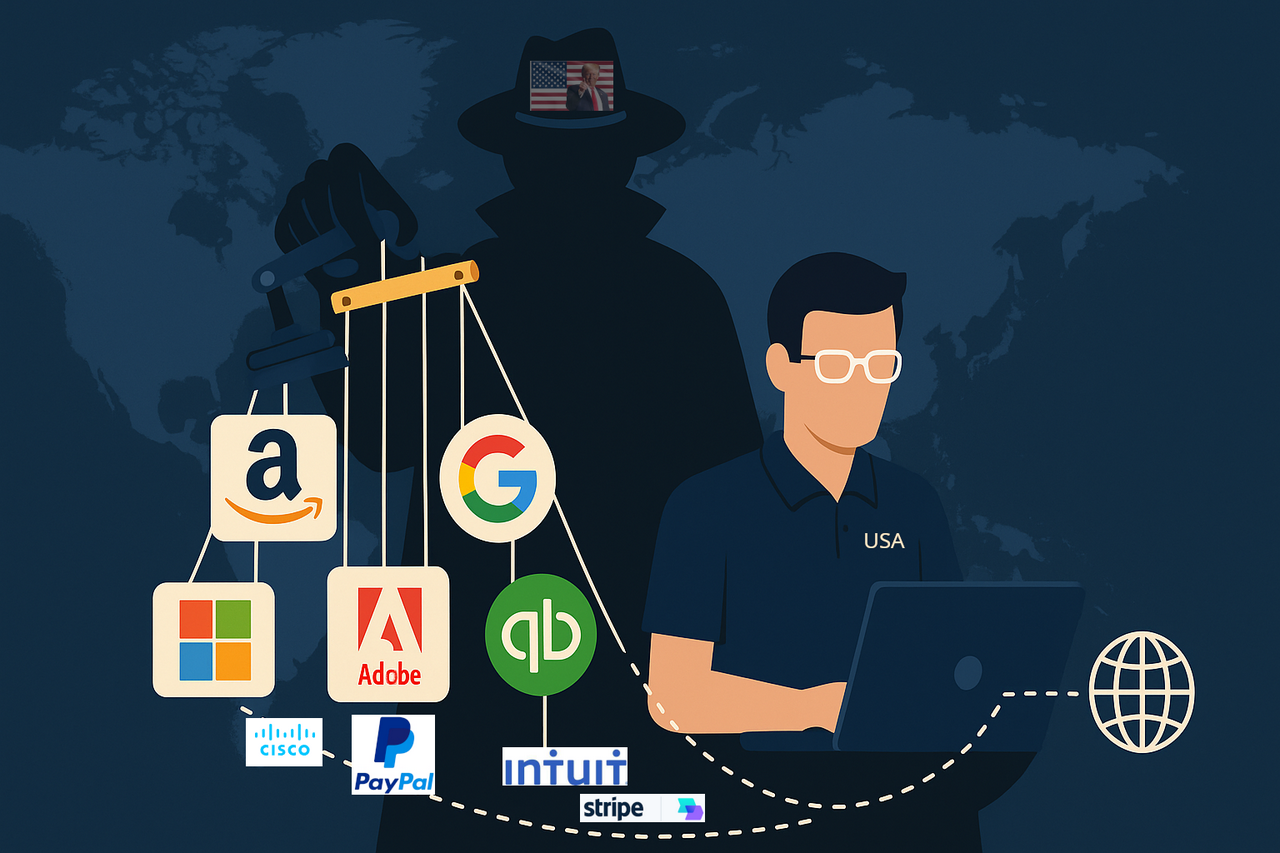
Most people think of surveillance as satellites and spies. But the real power move is legal access to data, and the U.S. has architected a system that makes American cloud and tech firms a global collection grid.

This isn’t just about intelligence agencies. It’s about how U.S. laws intersect with the global dominance of American tech. Let’s break it down.

Three companies — Amazon (AWS), Microsoft (Azure), and Google — own 68% of the global public cloud market. That means most of the world’s digital infrastructure runs on U.S. platforms. Many other US companies piggyback on these services and provide storage for your financial transactions, document storage, bookkeeping, banking, contracts, legal advice medical data and endless other services. A short list is here:

  • Cloud infrastructure and data platforms: AWS; Microsoft Azure; Google Cloud.
  • Documents and file storage: Microsoft 365 (OneDrive, SharePoint); Google Workspace (Drive); Box; Dropbox; Adobe Document Cloud.
  • Bookkeeping and ERP: Intuit QuickBooks; Oracle NetSuite.
  • Payments and financial transactions: Visa; Mastercard; PayPal; Stripe; Block (Square).
  • Banking platforms: JPMorgan Chase; Bank of America; Citigroup.
  • Contracts and e‑sign / CLM: DocuSign; Adobe Acrobat Sign; Ironclad.
  • Legal tech and e‑discovery: iManage; NetDocuments; Relativity.
  • Healthcare EHR and portals: Epic Systems (MyChart); Oracle Health (Cerner); athenahealth.

In Q2 2025:

  • AWS: 30% of global cloud infrastructure
  • Microsoft: 20%
  • Google: 13% (Source: Synergy Research Group)

Whether you're a European startup, an African NGO, or an Asian government agency, chances are some part of your digital operations flows through U.S.-controlled platforms.

A common assumption is: “If our data is stored in Europe, we’re safe from U.S. jurisdiction.” Not true.

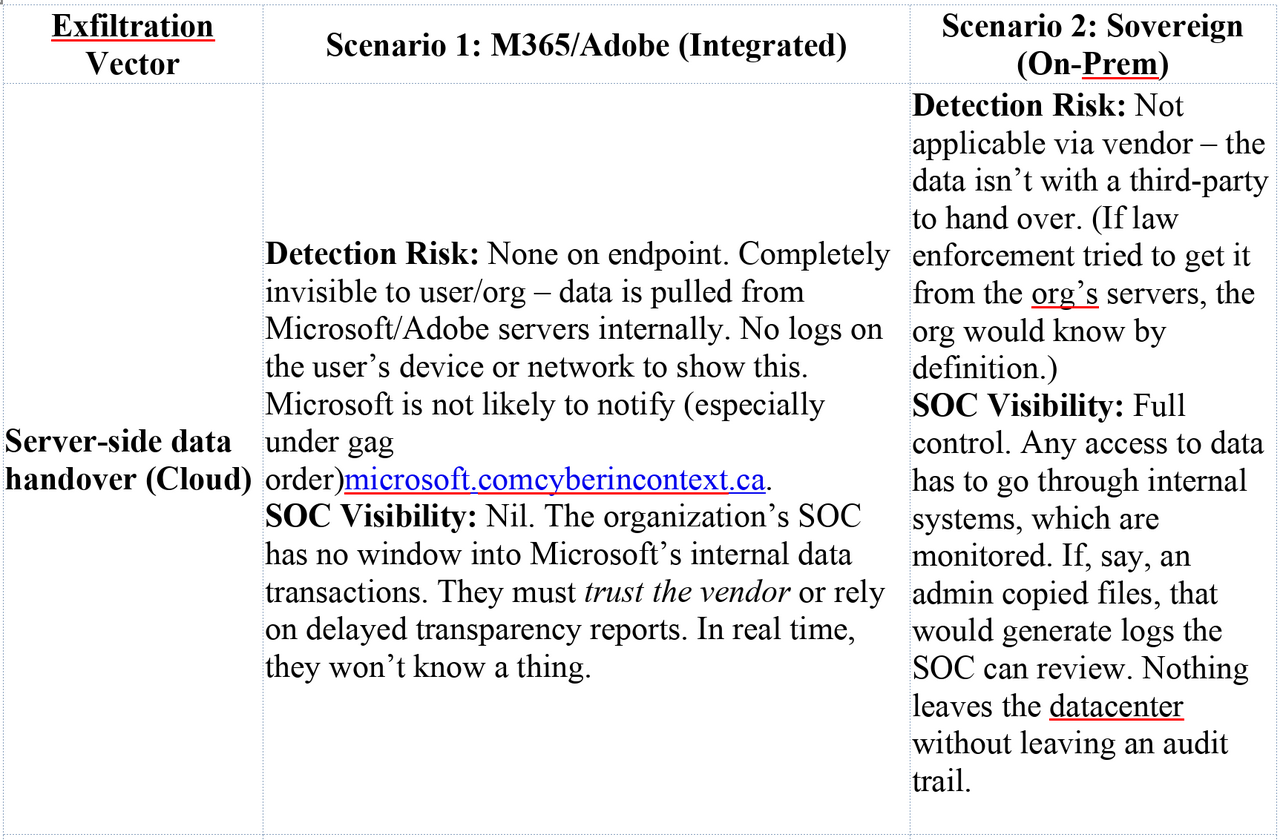
The CLOUD Act lets U.S. authorities compel American tech companies to hand over data they “control,” even if that data sits on servers in Dublin, Frankfurt, or Singapore.

Example: A U.S. warrant served in California can require Microsoft to hand over emails stored in Ireland, as long as Microsoft has access and control. This exact issue triggered the Microsoft-Ireland case, but the CLOUD Act resolved it by giving U.S. law extraterritorial reach.

It’s not just the company — it’s the people too.

If you hire a U.S. systems admin working remotely from New York, and they have credentials to your European systems, a U.S. court can compel them to assist in accessing that data. That’s because U.S. law focuses on “possession, custody, or control”, not geography.

You Likely Will Never Know It Happened!

U.S. courts can issue nondisclosure orders, gag orders that bar cloud providers from telling you your data was accessed. While recent rulings have narrowed their scope, targeted secrecy remains legal and routine.

Bottom line: Access can happen behind your back, and legally so.

Intelligence Collection Runs in Parallel

This isn't just about law enforcement. U.S. intelligence agencies operate under FISA Section 702, which lets them target non-U.S. persons abroad — with help from service providers. The definition of “provider” includes not just companies, but their staff, agents, and even custodians.

This law was reauthorized in April 2024 and stays in effect until April 2026. It’s a separate, classified channel of compelled access.

Can the U.S. Compel Its Citizens Abroad?

Yes. If you're a U.S. national living in another country, courts can subpoena you under 28 U.S.C. § 1783 to produce documents or testify — and enforce it via contempt. Physical presence abroad doesn't shield you.

What About “Sovereign” Cloud?

Microsoft’s EU Data Boundary is often cited as a privacy solution. It keeps storage and processing within the EU, reducing routine data movement. That’s helpful for compliance and optics.

But legally, it doesn’t block U.S. demands. At a French Senate hearing in June 2025, Microsoft France’s legal director couldn’t guarantee that EU-stored data wouldn’t be handed over to U.S. authorities if compelled.

As long as a U.S. entity holds control, storing data in-region doesn’t reduce how much of it can be compelled. The geography may change — the legal risk doesn’t.

Compliance ≠ Control

Many companies focus on “paper compliance”: model clauses, certifications, and documentation that say they’re protecting data.

But real-world outcomes depend on control:

  • Who holds the encryption keys?
  • Who can access the console?
  • Where do the admins sit?
  • Who pays their salary?

If a U.S. provider or person ultimately controls access, then the data is within U.S. legal reach no matter where it lives. The only durable solution is removing U.S. control altogether.

The U.S. hasn’t built the world’s largest spy network by hiding in the shadows. It’s done it by being the backbone of global tech and writing laws that treat control as more important than location.

If you’re a global business, policymaker, or technologist, this isn’t someone else’s problem. It’s a strategic risk you need to understand.

References:

Synergy Research Group, “Q2 Cloud Market Nears $100 Billion Milestone,” 31 Jul 2025 https://www.srgresearch.com/articles/q2-cloud-market-nears-100-billion-milestone-and-its-still-growing-by-25-year-over-year

18 U.S.C. § 2713 (CLOUD Act extraterritorial production) https://www.law.cornell.edu/uscode/text/18/2713

United States v. Microsoft Corp., No. 17‑2 (Apr. 17, 2018) (moot after CLOUD Act) https://www.supremecourt.gov/opinions/17pdf/17-2_1824.pdf

FRCP Rule 34 (possession, custody, or control) https://www.law.cornell.edu/rules/frcp/rule_34

18 U.S.C. § 2703(h) (CLOUD Act comity analysis, Congress.gov) https://www.congress.gov/bill/115th-congress/senate-bill/2383/text

18 U.S.C. § 2705(b) (SCA nondisclosure orders) https://www.law.cornell.edu/uscode/text/18/2705

In re Sealed Case, No. 24‑5089 (D.C. Cir. July 18, 2025) (limits omnibus gags) https://media.cadc.uscourts.gov/opinions/docs/2025/07/24-5089-2126121.pdf

50 U.S.C. § 1881a (FISA § 702 procedures) https://www.law.cornell.edu/uscode/text/50/1881a

50 U.S.C. § 1881(b)(4) (ECSP definition includes officers, employees, custodians, agents) https://www.law.cornell.edu/uscode/text/50/1881

PCLOB, Section 702 Oversight Project page (RISAA reauth and April 19, 2026 sunset) https://www.pclob.gov/OversightProjects/Details/20

28 U.S.C. § 1783 (subpoena of US nationals abroad) and § 1784 (contempt) https://www.law.cornell.edu/uscode/text/28/1783 https://www.law.cornell.edu/uscode/text/28/1784

Microsoft, “What is the EU Data Boundary?” https://learn.microsoft.com/en-us/privacy/eudb/eu-data-boundary-learn

Microsoft, “Continuing data transfers that apply to all EU Data Boundary services” https://learn.microsoft.com/en-us/privacy/eudb/eu-data-boundary-transfers-for-all-services

French Senate hearing notice: “Commande publique : audition de Microsoft,” 10 Jun 2025 https://www.senat.fr/actualite/commande-publique-audition-de-microsoft-5344.html

Coverage of the hearing (example): The Register, “Microsoft exec admits it ‘cannot guarantee’ data sovereignty,” 25 Jul 2025 https://www.theregister.com/2025/07/25/microsoft_admits_it_cannot_guarantee/

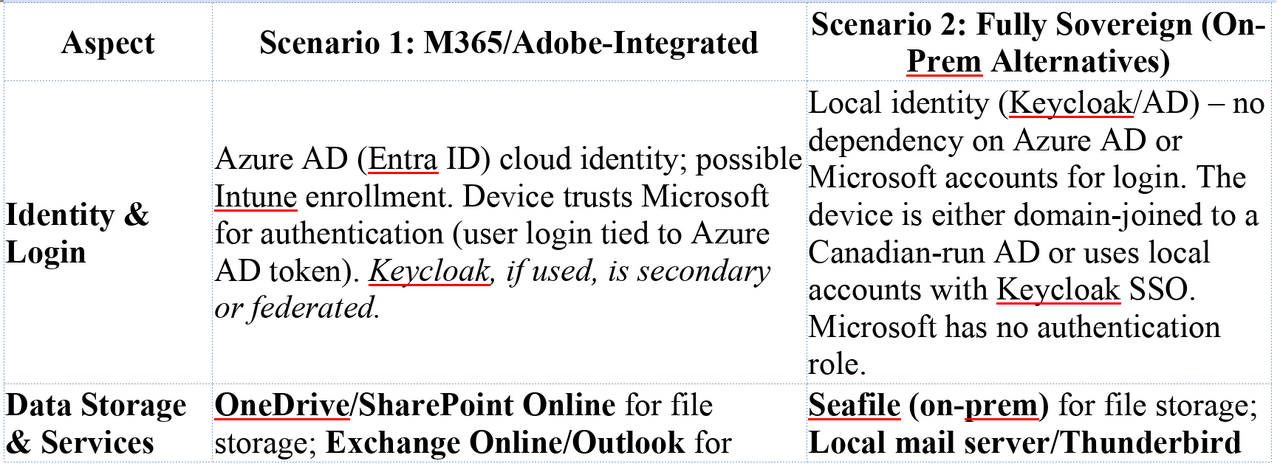
Scenario Overview

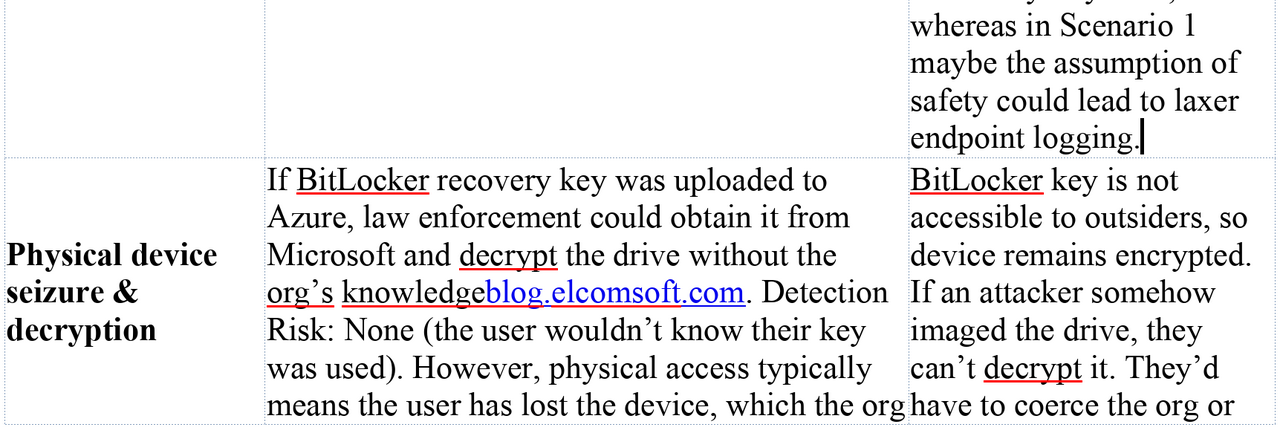
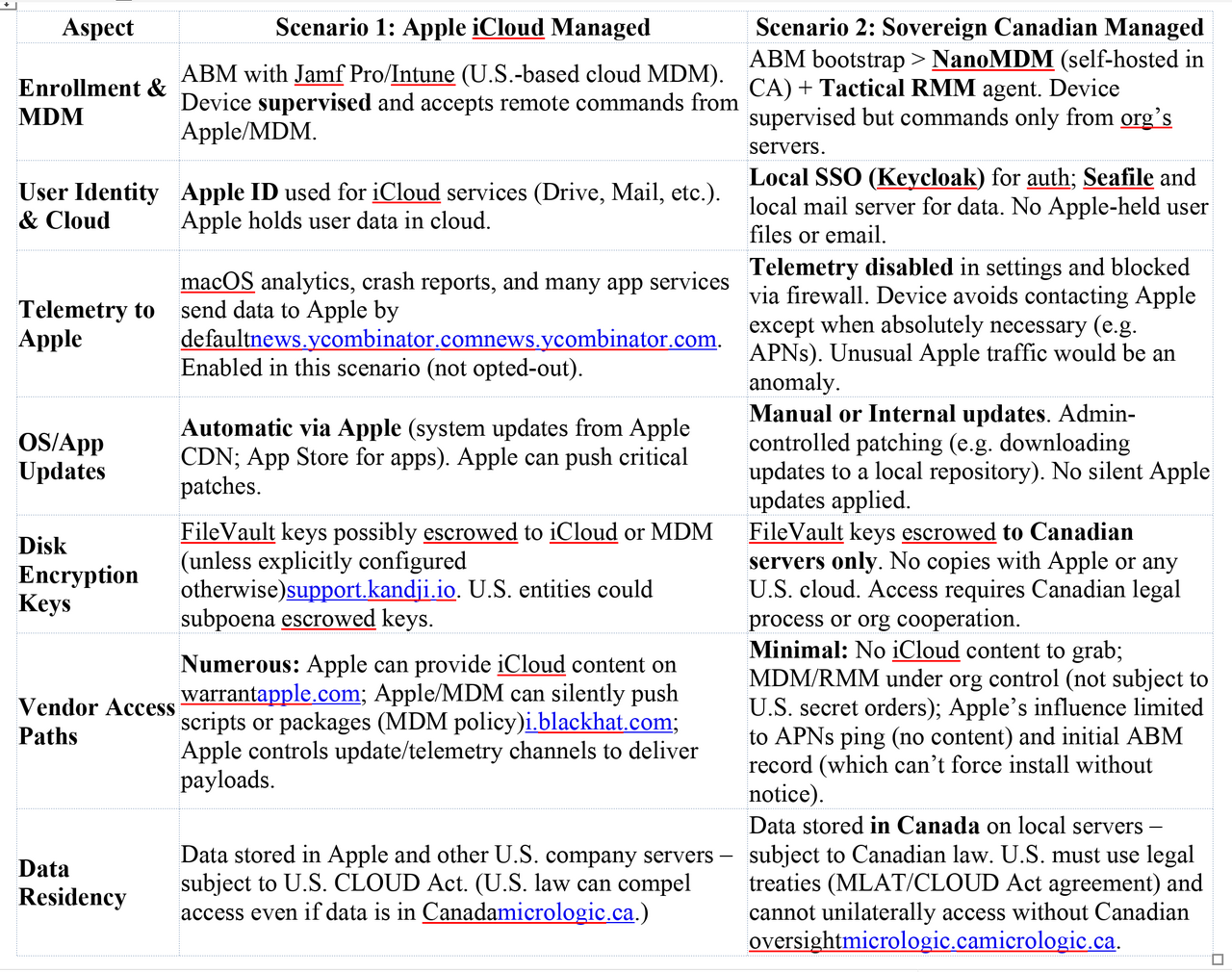
Microsoft 365-Integrated Workstation (Scenario 1): A Windows 11 Enterprise device fully integrated with Microsoft’s cloud ecosystem. The machine is joined to Microsoft Entra ID (formerly Azure AD) for identity and possibly enrolled in Microsoft Intune for device management. The user leverages Office 365 services extensively: their files reside in OneDrive and SharePoint Online, email is through Exchange Online (Outlook), and collaboration via Teams is assumed. They also use Adobe Acrobat with an Adobe cloud account for PDF services. The device’s telemetry settings are largely default – perhaps nominally curtailed via Group Policy or a tool like O&O ShutUp10++, but Windows still maintains some level of background diagnostic reporting. System updates are retrieved directly from Windows Update (Microsoft’s servers), and Office/Adobe apps update via their respective cloud services. BitLocker full-disk encryption is enabled; since the device is Entra ID-joined, the recovery key is automatically escrowed to Azure AD unless proactively disabled, meaning Microsoft holds a copy of the decryption keyblog.elcomsoft.com. All in all, in Scenario 1 the user’s identity, data, and device management are entwined with U.S.-based providers (Microsoft and Adobe). This provides convenience and seamless integration, but also means those providers have a trusted foothold in the environment.

Fully Sovereign Workstation (Scenario 2): A Windows 11 Enterprise device configured for data sovereignty on Canadian soil, minimizing reliance on foreign services. There is no Azure AD/AAD usage – instead, user authentication is through a local Keycloak Identity and Access Management system (e.g. the user logs into Windows via Keycloak or an on-prem AD federated with Keycloak), ensuring credentials and identity data stay internal. Cloud services are replaced with self-hosted equivalents: Seafile (hosted in a Canadian datacenter) provides file syncing in lieu of OneDrive/SharePoint, OnlyOffice (self-hosted) or similar enables web-based document editing internally, and Xodo or another PDF tool is used locally without any Adobe cloud connection. Email is handled by an on-prem mail server (e.g. a Linux-based Postfix/Dovecot with webmail) or via a client like Thunderbird, rather than Exchange Online. The device is managed using open-source, self-hosted tools: for example, Tactical RMM (remote monitoring & management) and Wazuh (security monitoring/EDR) are deployed on Canadian servers under the organization’s control. All Windows telemetry is disabled via group policies and firewall/DNS blocks – diagnostic data, Windows Error Reporting, Bing search integration, etc., are turned off, and known telemetry endpoints are blackholed. The workstation does not automatically reach out to Microsoft for updates; instead, updates are delivered manually or via an internal WSUS/update repository after being vetted. BitLocker disk encryption is used but recovery keys are stored only on local servers (e.g. in an on-prem Active Directory or Keycloak vault), never sent to Microsoft. In short, Scenario 2 retains the base OS (Windows) but wraps it in a bubble of sovereign infrastructure – Microsoft’s cloud is kept at arm’s length, and the device does not trust or rely on any U.S.-controlled cloud services for its regular operation.

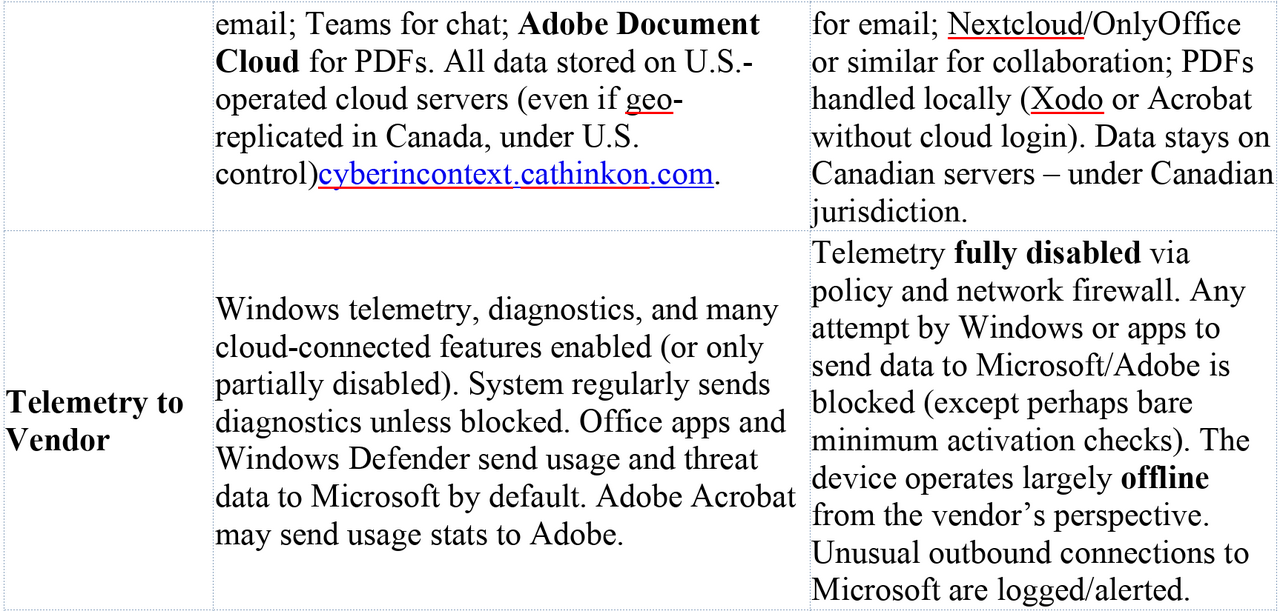
Telemetry, Update Channels, and Vendor Control

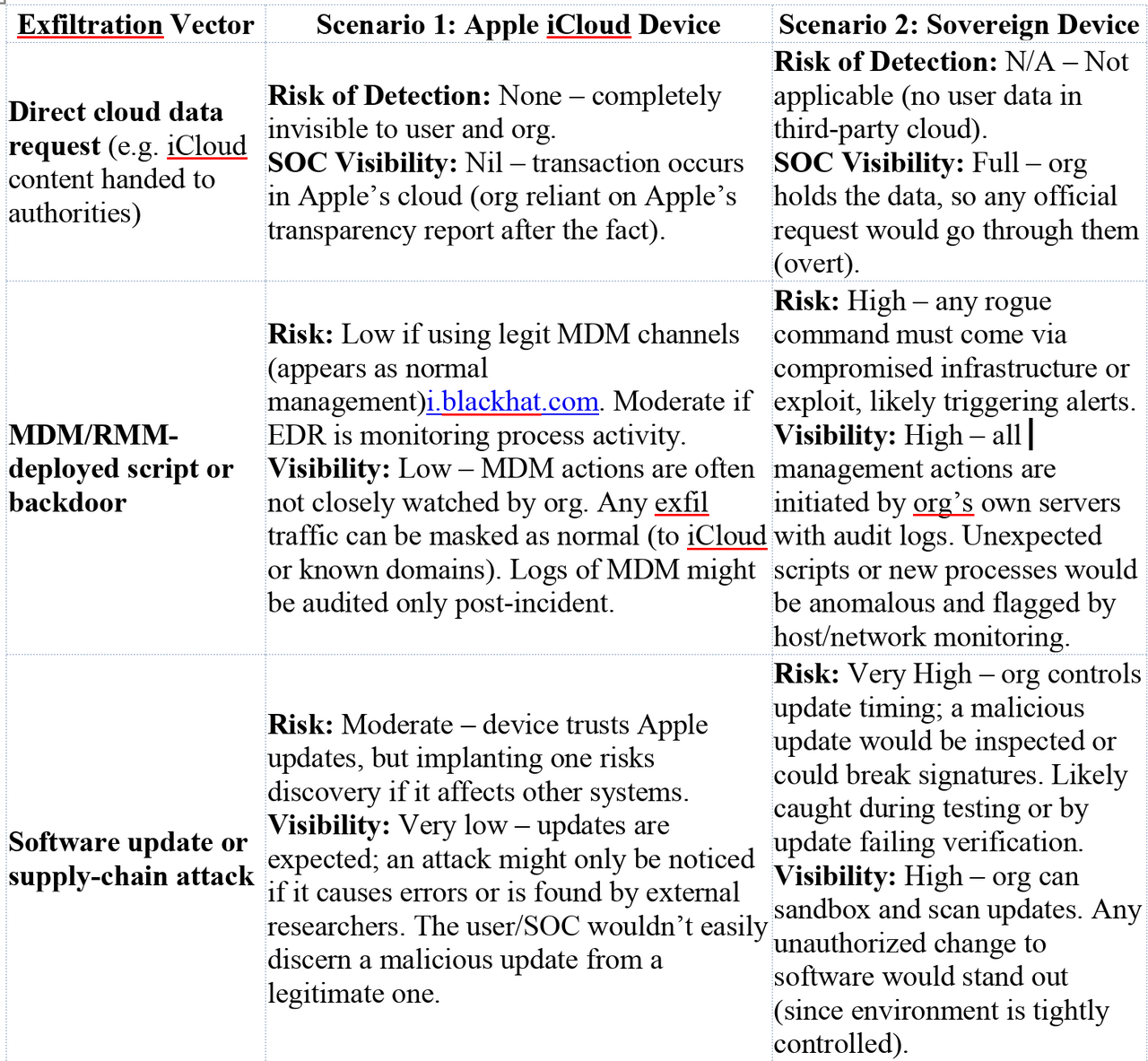
Microsoft-Facing Telemetry & Cloud Services (Scenario 1): By default, a Windows 11 Enterprise machine in this scenario will communicate regularly with Microsoft and other third-party clouds. Unless aggressively curtailed, Windows telemetry sends diagnostic and usage data to Microsoft’s servers. This can include device hardware info, performance metrics, app usage data, reliability and crash reports, and more. Even if an admin uses Group Policy or tools like O&O ShutUp10 to reduce telemetry (for instance, setting it to “Security” level), the OS sometimes re-enables certain diagnostic components after updatesborncity.comborncity.com. Built-in features like Windows Error Reporting (WER) may upload crash dumps to Microsoft when applications crash. Many Windows components also reach out to cloud services by design – for example, Windows Search might query Bing, the Start Menu may fetch online content, and SmartScreen filters (and Windows Defender cloud protection) check URLs and file signatures against Microsoft’s cloud. In an Office 365-integrated setup, Office applications and services add another layer of telemetry. Office apps often send usage data and telemetry to Microsoft (unless an organization explicitly disables “connected experiences”). The user’s OneDrive client runs in the background, continuously syncing files to Microsoft’s cloud. Outlook is in constant contact with Exchange Online. If the user is logged into the Adobe Acrobat DC app with an Adobe ID, Acrobat may synchronize documents to Adobe’s Document Cloud and send Adobe usage analytics. Furthermore, because the device is Entra ID-joined and possibly Intune-managed, it maintains an Entra ID/Intune heartbeat: it will periodically check in with Intune’s cloud endpoint for policy updates or app deployments, and listen for push notifications (on Windows, Intune typically uses the Windows Notification Services for alerts to sync). Windows Update and Microsoft Store are another significant channel – the system frequently contacts Microsoft’s update servers to download OS patches, driver updates, and application updates (for any Store apps or Edge browser updates). All of these sanctioned communications mean the device has numerous background connections to vendor servers, any of which could serve as an access vector if leveraged maliciously by those vendors. In short, Microsoft (and Adobe) have ample “touchpoints” into the system: telemetry pipelines, cloud storage sync, update delivery, and device management channels are all potential conduits for data exfiltration or command execution in Scenario 1 if those vendors cooperated under legal pressure.

Key surfaces in Scenario 1 that are theoretically exploitable by Microsoft/Adobe or their partners (with lawful authority) include:

  • Diagnostic Data & Crash Reports: If not fully disabled, Windows and Office will send crash dumps and telemetry to Microsoft. These could reveal running software, versions, and even snippets of content in memory. A crash dump of, say, a document editor might inadvertently contain portions of a document. Microsoft’s policies state that diagnostic data can include device configuration, app usage, and in some cases snippets of content for crash analysis – all uploaded to Microsoft’s servers. Even with telemetry toned down, critical events (like a Blue Screen) often still phone home. These channels are intended for support and improvement, but in a red-team scenario, a state actor could use them to glean environment details or even attempt to trigger a crash in a sensitive app to generate a report for collection (this is speculative, but exemplifies the potential of vendor diagnostics as an intel channel). Notably, antivirus telemetry is another avenue: Windows Defender by default will automatically submit suspicious files to Microsoft for analysis. Under coercion, Microsoft could flag specific documents or data on the disk as “suspicious” so that Defender uploads them quietly (more on this later).
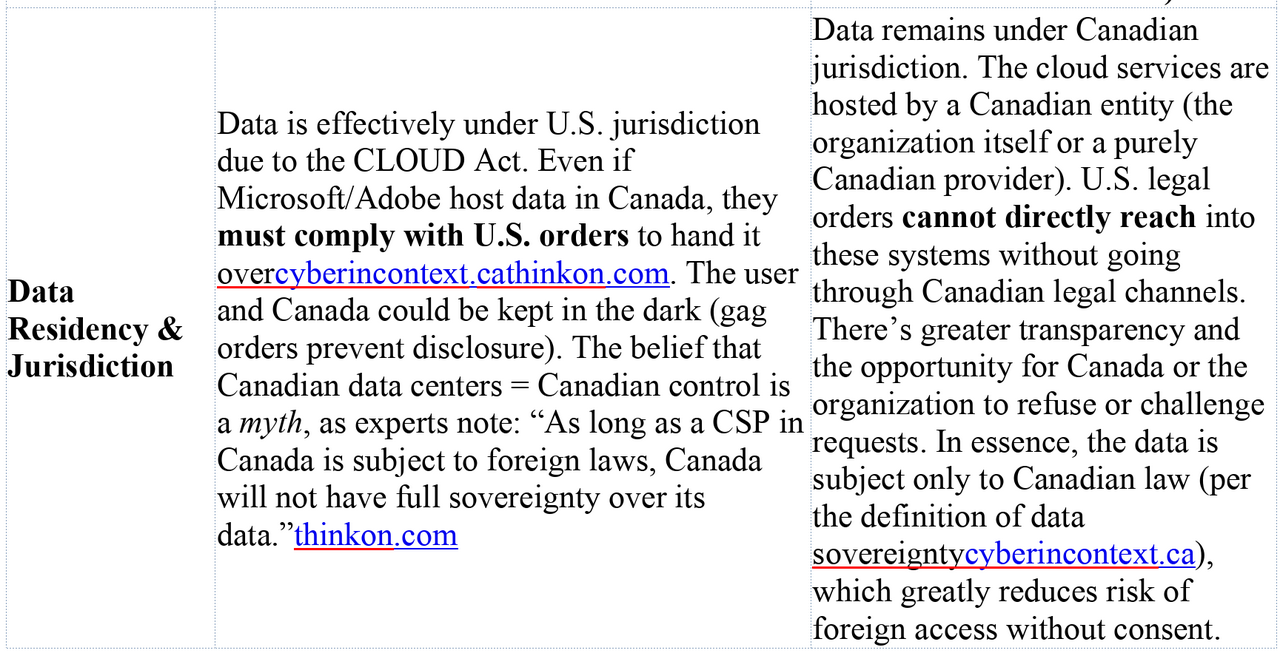
  • Cloud File Services (OneDrive/SharePoint): In Scenario 1, most of the user’s files reside on OneDrive/SharePoint (which are part of Microsoft’s cloud) by design. For example, Windows 11 encourages storing Desktop/Documents in OneDrive. This means Microsoft already possesses copies of the user’s data on their servers, accessible to them with proper authorization. Similarly, the user’s emails in Exchange Online, calendar, contacts, Teams chats, and any content in the O365 ecosystem are on Microsoft’s infrastructure. The integration of the device with these cloud services creates a rich server-side target (discussed in the exfiltration section). Adobe content, if the user saves PDFs to Adobe’s cloud or uses Adobe Sign, is also stored on Adobe’s U.S.-based servers. Both Microsoft and Adobe, as U.S. companies, are subject to the CLOUD Act – under which they can be compelled to provide data in their possession to U.S. authorities, regardless of where that data is physically storedmicrosoft.comcyberincontext.ca. In essence, by using these services, the user’s data is readily accessible to the vendor (and thus to law enforcement with a warrant) without needing to touch the endpoint at all.
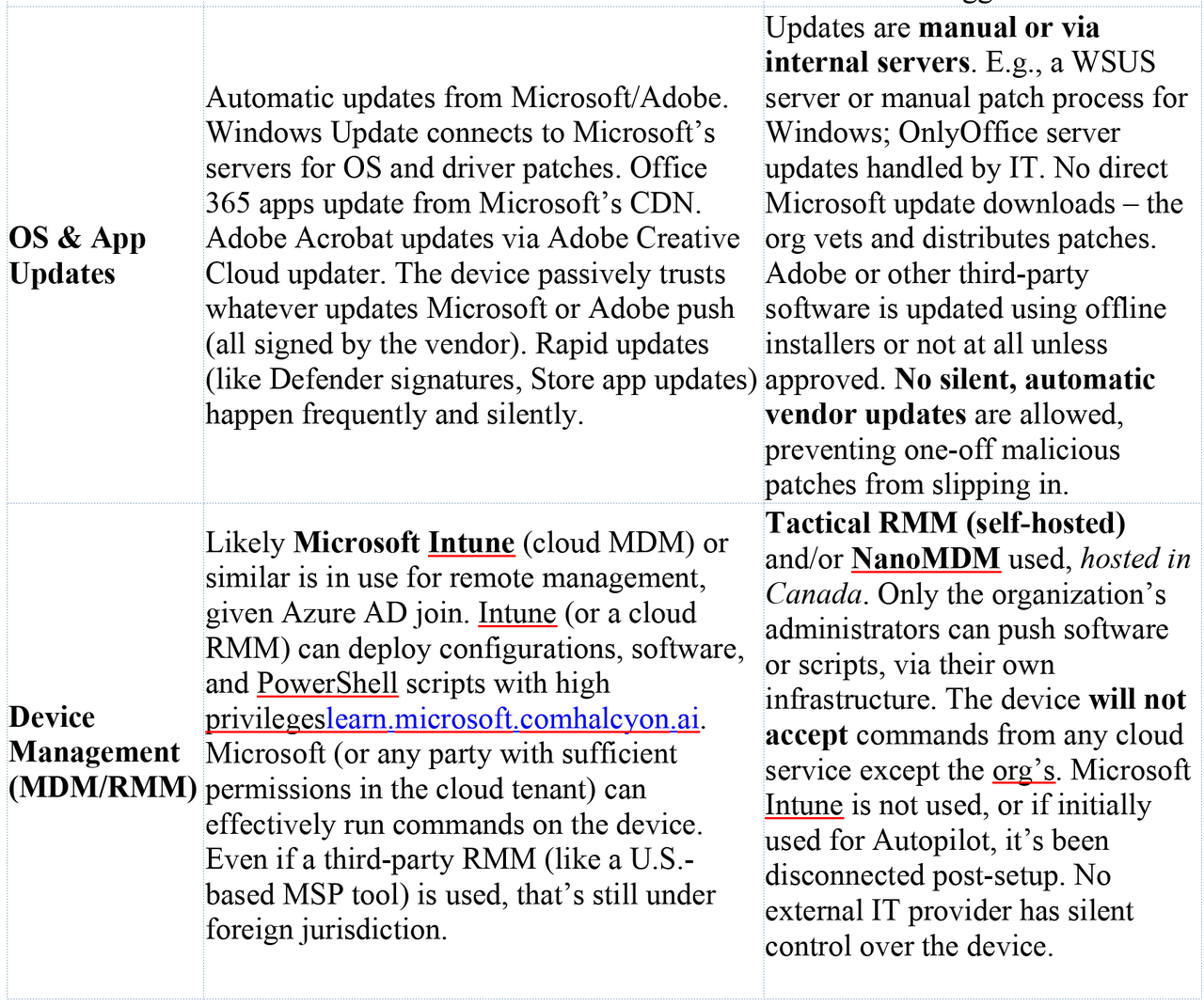
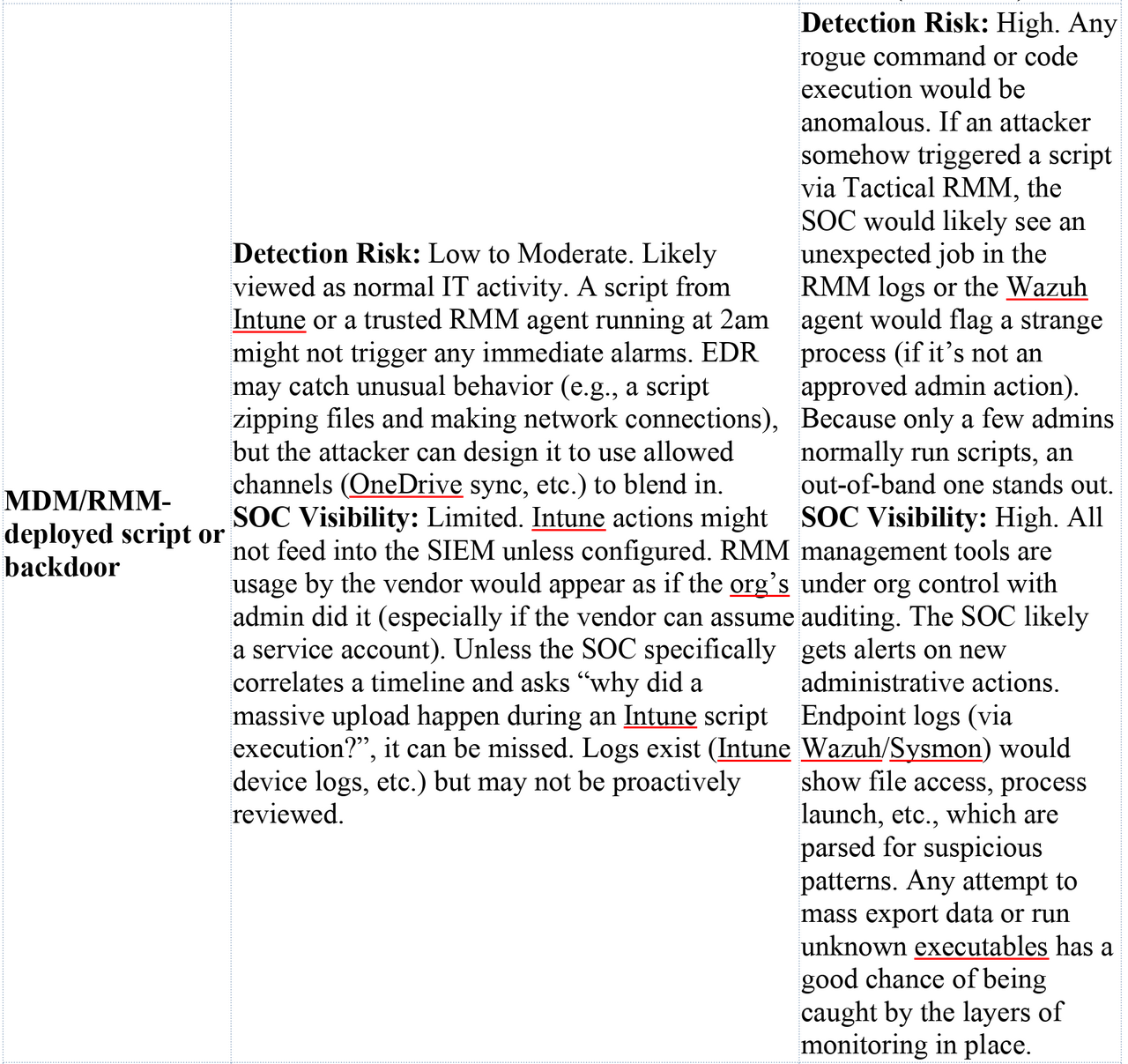
  • Device Management & Trusted Execution: If the device is managed by Microsoft Intune (or a similar MDM), Microsoft or any party with control of the Intune tenant can remotely execute code or configuration on the endpoint. Intune allows admins to deploy PowerShell scripts and software packages to enrolled Windows devices silentlylearn.microsoft.comhalcyon.ai. These scripts can run as SYSTEM (with full privileges) if configured as such, and they do not require the user to be logged in or consentlearn.microsoft.com. In a normal enterprise, only authorized IT admins can create Intune deployments – but in a scenario of secret vendor cooperation, Microsoft itself (at the behest of a FISA order, for example) could potentially inject a script or policy into the Intune pipeline targeting this device. Because Intune is a cloud service, such an action might be done without the organization’s awareness (for instance, a malicious Intune policy could be created and later removed by someone with back-end access at Microsoft). The Intune management extension on the device would then execute the payload, which could harvest files, keystrokes, or other data. This would all appear as normal device management activity. In fact, attackers in the wild have used stolen admin credentials to push malware through Intune, masquerading as IT taskshalcyon.ai. Under state direction, the same could be done via Microsoft’s cooperation – the device trusts Intune and will run whatever it’s told, with the user none the wiser (no pop-up, nothing visible aside from maybe a transient process).
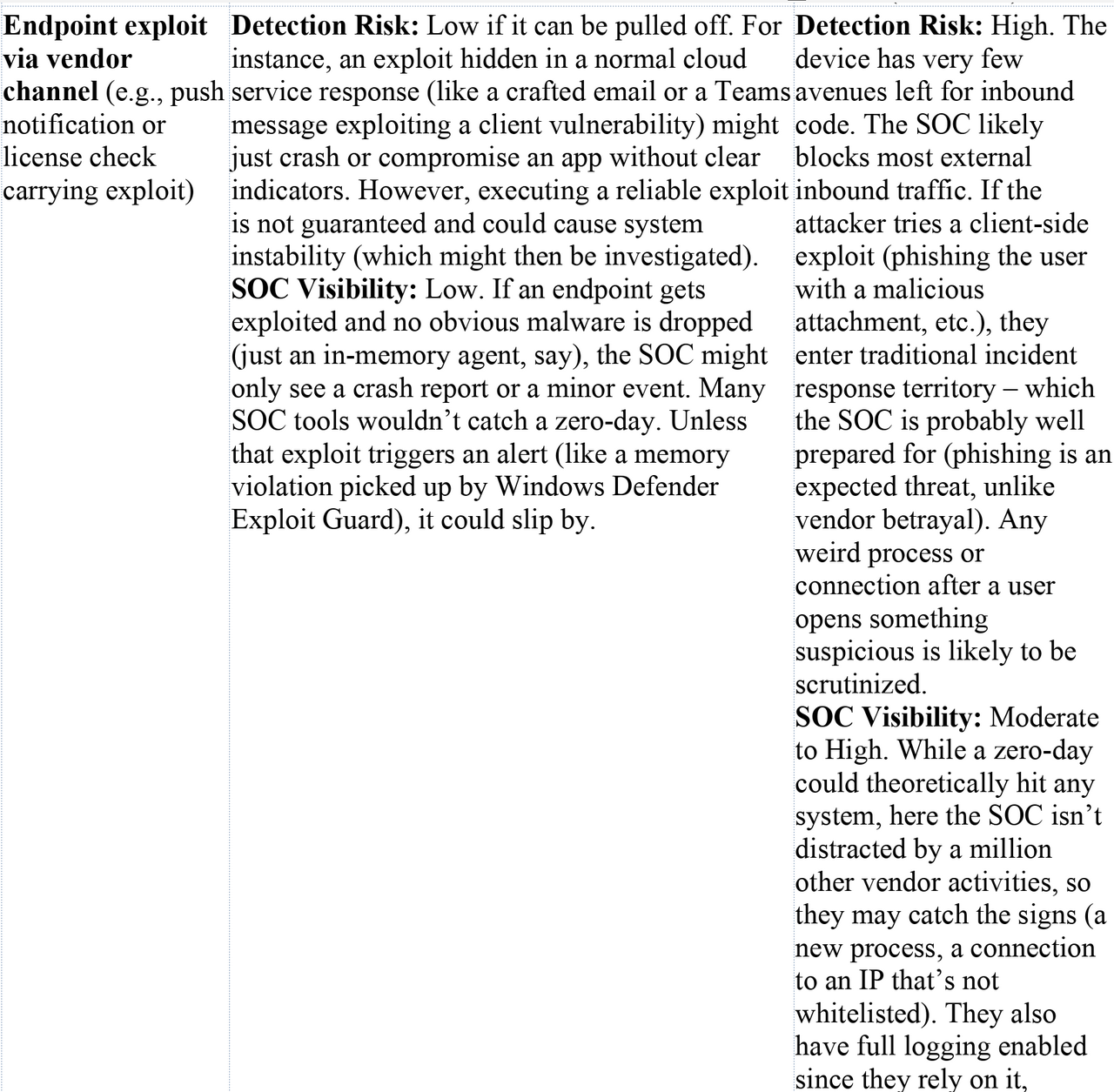
  • Software Update / Supply Chain: Windows 11 trusts Microsoft-signed code updates implicitly. Microsoft could, under extreme circumstances, ship a targeted malicious update to this one device or a small set of devices. For example, a malicious Windows Defender signature update or a fake “security patch” could be crafted to include an implant. Normally, Windows Update deployments go to broad audiences, but Microsoft does have the ability to do device-specific targeting in certain cases (e.g., an Intune-managed device receiving a custom compliance policy, or hypothetically using the device’s unique ID in the update API). Even if true one-off targeting is difficult via Windows Update, Microsoft could exploit the Windows Defender cloud: as noted, by updating Defender’s cloud-delivered signatures, they might classify a particular internal tool or document as malware, which would cause Defender on the endpoint to quarantine or even upload it. There’s precedent for security tools being used this way – essentially turning the AV into an exfiltration agent by design (it’s supposed to send suspicious files to the cloud). Additionally, Microsoft Office and Edge browser periodically fetch updates from Microsoft’s CDN. A coerced update (e.g., a malicious Office add-in pushed via Office 365 central deployment) is conceivable, running with the user’s privileges when Office launches. Adobe similarly distributes updates for Acrobat/Creative Cloud apps. A state actor could pressure Adobe to issue a tampered update for Acrobat that only executes a payload for a specific user or org (perhaps triggered by an Adobe ID). Such a supply-chain attack is highly sophisticated and risky, and there’s no public evidence of Microsoft or Adobe ever doing one-off malicious updates. But from a purely technical standpoint, the channels exist and are trusted by the device – making them potential vectors if the vendor is forced to comply secretly. At the very least, Microsoft’s cloud control of the software environment (via updates, Store, and cloud configuration) means the attack surface is much broader compared to an isolated machine.

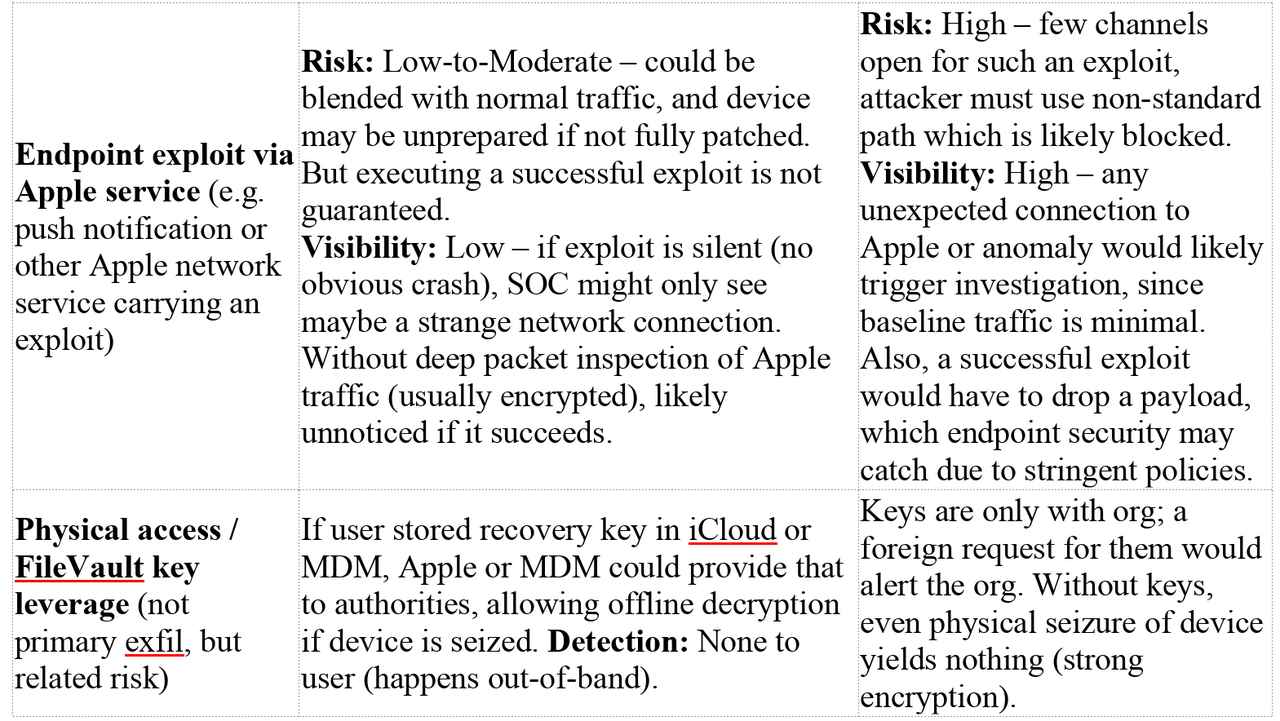
In summary, Scenario 1’s design means the vendor’s infrastructure has tentacles into the device for legitimate reasons (updates, sync, telemetry, management). Those same tentacles can be repurposed for covert access. The device frequently “calls home” to Microsoft and Adobe, providing an attacker with opportunities to piggyback on those connections or data stores.

Sovereign Controls (Scenario 2): In the sovereign configuration, the organization has deliberately shut off or internalized all those channels to block vendor access and eliminate quiet data leaks:

  • No Cloud Data Storage: The user does not use OneDrive, SharePoint, Exchange Online, or Adobe Cloud. Therefore, there is no trove of files or emails sitting on Microsoft/Adobe servers to be subpoenaed. The data that would normally be in OneDrive is instead on Seafile servers physically in Canada. Emails are on a Canadian mail server. These servers are under the organization’s control, protected by Canadian law. Apple’s iCloud was a concern in the Mac scenario; here, Office 365 is the parallel – and it’s gone. Microsoft cannot hand over what it does not have. A U.S. agency cannot quietly fetch the user’s files from Microsoft’s cloud, because those files live only on the user’s PC and a Canadian server. (In the event they try legal means, they’d have to go through Canadian authorities and ultimately the org itself, which is not covert.) By removing U.S.-based cloud services, Scenario 2 closes the gaping vendor-mediated backdoor present in Scenario 1thinkon.comthinkon.com.
  • Identity and Login: The machine is not Azure AD joined; it likely uses a local Active Directory or is standalone with a Keycloak-based login workflow. This means the device isn’t constantly checking in with Azure AD for token refresh or device compliance. Keycloak being on-premises ensures authentication (Kerberos/SAML/OIDC tickets, etc.) stay within the org. Microsoft’s identity control (so powerful in Scenario 1) is absent – no Azure AD Conditional Access, no Microsoft account tokens. Thus, there’s no avenue for Microsoft to, say, disable the account or alter conditional access policies to facilitate an attack. Moreover, BitLocker keys are only stored internally (like in AD or a secure vault). In Scenario 1, BitLocker recovery could be obtained from Azure AD by law enforcement (indeed, Windows 11 automatically uploads keys to Azure AD/Microsoft Account by defaultblog.elcomsoft.com). In Scenario 2, the keys are on Canadian infrastructure – a subpoena to Microsoft for them would turn up empty. Accessing them would require involving the organization or obtaining a Canadian warrant, again defeating covert action.
  • Telemetry Disabled and Blocked: The organization in Scenario 2 uses both policy and technical controls to ensure Windows isn’t talking to Microsoft behind the scenes. Using Windows Enterprise features, admins set the diagnostic data level to “Security” (the minimal level, essentially off) and disable Windows Error Reporting, feedback hubs, etc. They deploy tools like O&O ShutUp10++ or scripted regedits to turn off even the consumer experience features that might leak data. Importantly, they likely implement network-level blocking for known telemetry endpoints (e.g. vortex.data.microsoft.com, settings-win.data.microsoft.com, and dozens of others). This is crucial because even with settings off, some background traffic can occur (license activation, time sync, etc.). The firewall might whitelist only a small set of necessary Microsoft endpoints (perhaps Windows Update if they don’t have WSUS, and even that might be routed through a caching server). In many lockdown guides, tools like Windows Defender’s cloud lookup, Bing search integration, and even the online certificate revocation checks can be proxied or blocked to avoid information leak. The result is that any unexpected communication to Microsoft’s servers would be anomalous. If, for instance, the workstation suddenly tried to contact an Azure AD or OneDrive endpoint, the local SOC would treat that as a red flag, since the device normally has no reason to do so. In effect, the background noise of vendor telemetry is dialed down to near-zero, so it’s hard for an attacker to hide in it – there is no benign “chatter” with Microsoft to blend withthinkon.comborncity.com. Microsoft loses visibility into the device’s state; Windows isn’t dutifully uploading crash dumps or usage data that could be mined. Adobe as well has no footprint – Acrobat isn’t logging into Adobe’s cloud, and any update checks are disabled (the org might update Acrobat manually or use an offline installer for Xodo/other PDF readers to avoid Adobe Updater service).
  • Internal Update and Patching: Rather than letting each PC independently pull updates from Microsoft, Scenario 2 uses a controlled update process. This could be an on-premises WSUS (Windows Server Update Services) or a script-driven manual update where IT downloads patches, tests them, and then deploys to endpoints (possibly via Tactical RMM or Group Policy). By doing this, the org ensures that no unvetted code runs on the workstation. Microsoft cannot silently push a patch to this machine without the IT team noticing, because the machine isn’t automatically asking Microsoft for updates – it’s asking the internal server, or nothing at all until an admin intervenes. The same goes for application software: instead of Microsoft Office 365 (with its monthly cloud-driven updates), they likely use OnlyOffice which the org updates on their own schedule. Any software that does auto-update (maybe a browser) would be configured to use an internal update repository or simply be managed by IT. This air-gap of the update supply chain means even if Microsoft created a special update, the machine wouldn’t receive it unless the org’s IT approves. Compare this to Scenario 1, where something like a Windows Defender signature update arrives quietly every few hours from Microsoft – in Scenario 2, even Defender’s cloud features might be turned off or constrained to offline mode. Overall, the software trust boundary is kept local: the workstation isn’t blindly trusting the Microsoft cloud to tell it what to install.
  • Self-Hosted Device Management (MDM/RMM): Rather than Intune (cloud MDM) or other third-party SaaS management, Scenario 2 employs Tactical RMM and potentially NanoMDM (if they needed an MDM protocol for certain Apple-like enrollment, though for Windows, likely traditional AD + RMM suffices). These tools are hosted on servers in Canada, under the org’s direct control. No outside entity can initiate a management action on the device because the management servers aren’t accessible to Microsoft or any third party. Intune uses Microsoft’s push notification service and lives in Azure – not the case here. Tactical RMM agent communicates only with the org’s server, over secure channels. While it’s true that Microsoft’s push notification (WNS) is used by some apps, Tactical RMM likely uses its own agent-check in mechanism (or could use SignalR/websockets, etc., pointed to the self-hosted server). There is also no “vendor backdoor” account; whereas Jamf or Intune are operated by companies that could be served legal orders, Tactical RMM is operated by the organization itself. For an outside agency to leverage it, they would need to either compromise the RMM server (a direct hack, not just legal compulsion) or go through legal Canadian channels to ask the org to use it – which of course ruins the secrecy. Furthermore, because the device is still Windows, one might consider Microsoft’s own services like the Windows Push Notification Services (WNS) or Autopilot. However, if this device was initially provisioned via Windows Autopilot, it would have been registered in Azure AD – Scenario 2 likely avoids Autopilot altogether or used it only in a minimal capacity then severed the link. Thereafter, no persistent Azure AD/Autopilot ties remain. And while Windows does have WNS for notifications, unless a Microsoft Store app is listening (which in this setup, probably not much is – no Teams, no Outlook in this scenario), there’s little WNS traffic. Crucially, WNS by itself cannot force the device to execute code; it delivers notifications for apps, which are user-facing. So unlike Apple’s APNs+MDM combo, Windows has nothing similar that Microsoft can silently exploit when the device isn’t enrolled in their cloud.

Putting it together, Scenario 2’s philosophy is “disable, replace, or closely monitor” any mechanism where the OS or apps would communicate with or receive code from an external vendor. The attack surface for vendor-assisted intrusion is dramatically reduced. Microsoft’s role is now mostly limited to being the OS provider – and Windows, while still ultimately Microsoft’s product, is being treated here as if it were an offline piece of software. The organization is asserting control over how that software behaves in the field, rather than deferring to cloud-based automation from Microsoft.

Summary of Vendor-Controlled Surfaces: The table below highlights key differences in control and telemetry between the Microsoft-integrated Scenario 1 and the sovereign Scenario 2:

Feasible Exfiltration Strategies Under Lawful Vendor Cooperation

Given the above surfaces, a red team (or state actor with legal authority) aiming to covertly extract sensitive data would have very different options in Scenario 1 vs Scenario 2. The goal of such an actor is to obtain specific files, communications, or intelligence from the target workstation without the user or organization detecting the breach, and ideally without deploying obvious “malware” that could be forensically found later. We examine potential strategies in each scenario:

Scenario 1 (Microsoft/Adobe-Integrated) – Potential Exfiltration Paths:

  • Server-Side Cloud Data Dump (No Endpoint Touch): The path of least resistance is to go after the data sitting in Microsoft’s and Adobe’s clouds, entirely outside the endpoint. Microsoft can be compelled under a sealed warrant or FISA order to provide all data associated with the user’s Office 365 account – and do so quietlymicrosoft.comcyberincontext.ca. This would include the user’s entire Exchange Online mailbox (emails, attachments), their OneDrive files, any SharePoint/Teams files or chat history, and detailed account metadata. For example, if the user’s Documents folder is in OneDrive (common in enterprise setups), every file in “Documents” is already on Microsoft’s servers. Microsoft’s compliance and eDiscovery tools make it trivial to collect a user’s cloud data (administrators do this for legal holds regularly – here we assume Microsoft acts as the admin under court order). The key point: this method requires no action on the endpoint itself. It’s entirely a cloud-to-cloud transfer between Microsoft and the requesting agency. It would be invisible to the user and to the organization’s IT monitoring. Microsoft’s policy is to notify enterprise customers of legal demands only if legally allowed and to redirect requests to the customer where possiblemicrosoft.com. But in national security cases with gag orders, they are prohibited from notifying. Historically, cloud providers have handed over data without users knowing when ordered by FISA courts or via National Security Letters. As one Canadian sovereignty expert summarized, if data is in U.S. providers’ hands, it can be given to U.S. authorities “without the explicit authorization” or even knowledge of the foreign governmentcyberincontext.cacyberincontext.ca. Apple’s scenario had iCloud; here, Office 365 is no different. Microsoft’s own transparency report confirms they do turn over enterprise customer content in a (small) percentage of casesmicrosoft.com. Adobe, likewise, can be served a legal demand for any documents or data the user stored in Adobe’s cloud (for instance, PDF files synced via Acrobat’s cloud or any records in Adobe Sign or Creative Cloud storage). In short, for a large portion of the user’s digital footprint, the fastest way to get it is straight from the source – the cloud backend – with zero traces on the endpoint.
  • Intune or Cloud RMM-Orchestrated Endpoint Exfiltration: For any data that isn’t in the cloud (say, files the user intentionally kept only on the local machine or on a network drive not covered above), the adversary can use the device management channel to pull it. If the workstation is Intune-managed, a covert operator with influence over Microsoft could push a malicious script or payload via Intune. Microsoft Intune allows delivery of PowerShell scripts that run with admin privileges and no user interactionlearn.microsoft.com. A script could be crafted to, for example, compress targeted directories (like C:\Users\\Documents\ or perhaps the entire user profile) and then exfiltrate them. Exfiltration could be done by uploading to an external server over HTTPS, or even by reusing a trusted channel – e.g., the script might quietly drop the archive into the user’s OneDrive folder (which would sync it to cloud storage that Microsoft can then directly grab, blending with normal OneDrive traffic). Alternatively, Intune could deploy a small agent (packaged as a Win32 app deployment) that opens a secure connection out to a collection server and streams data. Because Intune actions are fully trusted by the device (they’re signed by Microsoft and executed by the Intune Management Extension which runs as SYSTEM), traditional security software would likely not flag this as malware. It appears as “IT administration.” From a detection standpoint, such an exfiltration might leave some logs on the device (script execution events, etc.), but these could be hard to catch in real time. Many organizations do not closely monitor every Intune action, since Intune is expected to be doing things. A sophisticated attacker could even time the data collection during off-hours and possibly remove or hide any local logs (Intune itself doesn’t log script contents to a readily visible location – results are reported to the Intune cloud, which the attacker could scrub). If the organization instead uses a third-party cloud RMM (e.g., an American MSP platform) to manage PCs, a similar tactic applies: the provider could silently deploy a tool or run a remote session to grab files, all under the guise of routine remote management. It’s worth noting that criminal attackers have exploited exactly this vector by compromising MSPs – using management tools to deploy ransomware or steal data from client machines. In our lawful scenario, it’s the vendor doing it to their client. The risk of detection here is moderate: If the organization has endpoint detection (EDR) with heuristics, it might notice an unusual PowerShell process or an archive utility running in an uncommon context. Network monitoring might catch a large upload. But an intelligent exfiltration could throttle and mimic normal traffic (e.g., use OneDrive sync or an HTTPS POST to a domain that looks benign). Because the device is expected to communicate with Microsoft, and the script can leverage that (OneDrive or Azure blob storage as a drop point), the SOC might not see anything alarming. And crucially, the organization’s administrators would likely have no idea that Intune was weaponized against them; they would assume all Intune actions are their own. Microsoft, as the Intune service provider, holds the keys in this scenario.
  • OS/Software Update or Defender Exploit: Another covert option is for Microsoft to use the software update mechanisms to deliver a one-time payload. For example, Microsoft could push a targeted Windows Defender AV signature update that flags a specific sensitive document or database on the system as malware, causing Defender to automatically upload it to the Microsoft cloud for “analysis.” This is a clever indirect exfiltration – the document ends up in Microsoft’s hands disguised as a malware sample. By policy, Defender is not supposed to upload files likely to contain personal data without user confirmationsecurity.stackexchange.com, but Microsoft has latitude in what the engine considers “suspicious.” A tailor-made signature could trigger on content that only the target has (like a classified report), and mark it in a way that bypasses the prompt (for executables, Defender doesn’t prompt – it just uploads). The user might at most see a brief notification that “malware was detected and removed” – possibly something they’d ignore or that an attacker could suppress via registry settings. Beyond AV, Microsoft could issue a special Windows Update (e.g., a cumulative update or a driver update) with a hidden payload. Since updates are signed by Microsoft, the device will install them trusting they’re legitimate. A targeted update could, for instance, activate the laptop’s camera/microphone briefly or create a hidden user account for later remote access. The challenge with Windows Update is delivering it only to the target device: Microsoft would have to either craft a unique hardware ID match (if the device has a unique driver or firmware that no one else has) or use Intune’s device targeting (blurring lines with the previous method). However, consider Microsoft Office macro or add-in updates: If the user runs Office, an update to Office could include a macro or plugin that runs once to collect data then self-delete. Microsoft could also abuse the Office 365 cloud management – Office has a feature where admins can auto-install an Add-in for users (for example, a compliance plugin). A rogue Add-in (signed by Microsoft or a Microsoft partner) could run whenever the user opens Word/Excel, and quietly copy contents to the cloud. Since it originates from Office 365’s trusted app distribution, the system and user again trust it. Adobe could do something analogous if the user frequently opens Acrobat: push an update that, say, logs all PDF text opened and sends to Adobe analytics. These supply-chain style attacks are complex and risk collateral impact if not extremely narrowly scoped. But under a lawful secret order, the vendor might deploy it only to the specific user’s device or account. Importantly, all such approaches leverage the fact that Microsoft or Adobe code executing on the machine is trusted and likely unmonitored. An implant hidden in a genuine update is far less likely to be caught by antivirus (it is the antivirus, in the Defender case, or it’s a signed vendor binary).
  • Leveraging Cloud Credentials & Sessions: In addition to direct data grabbing, an actor could exploit the integration of devices with cloud identity. For instance, with cooperation from Microsoft, they might obtain a token or cookie for the user’s account (or use a backdoor into the cloud service) to access data as if they were the user. This isn’t exactly “exfiltration” because it’s more about impersonating the user in the cloud (which overlaps with server-side data access already discussed). Another angle: using Microsoft Graph API or eDiscovery via the organization’s tenant. If law enforcement can compel Microsoft, they might prefer not to break into the device at all but rather use Microsoft’s access to the Office 365 tenant data. However, Microsoft’s policy for enterprise is usually to refer such requests to the enterprise IT (they said they try to redirect law enforcement to the customer for enterprise data)microsoft.com. Under FISA, they might not have that luxury and might be forced to pull data themselves.
  • Adobe-Specific Vectors: If the user’s workflow involves Adobe cloud (e.g., scanning documents to Adobe Scan, saving PDFs in Acrobat Reader’s cloud, or using Adobe Creative Cloud libraries), Adobe can be asked to hand over that content. Adobe’s Law Enforcement guidelines (not provided here, but in principle) would allow disclosure of user files stored on their servers with a warrant. Adobe doesn’t have the same device management reach as Microsoft, but consider that many PDF readers (including Adobe’s) have had web connectivity – for license checks, updates, or even analytics. A cooperation could involve Adobe turning a benign process (like the Acrobat update service) into an information collector just for this user. This is more speculative, but worth noting that any software that auto-updates from a vendor is a potential carrier.

In practice, a real-world adversary operating under U.S. legal authority would likely choose the least noisy path: first grab everything from the cloud, since that’s easiest and stealthiest (the user’s OneDrive/Email likely contain the bulk of interesting data). If additional info on the endpoint is needed (say there are files the user never synced or an application database on the PC), the next step would be to use Intune or Defender to snatch those with minimal footprint. Direct exploitation (hacking the machine with malware) might be a last resort because it’s riskier to get caught and not necessary given the “insider” access the vendors provide. As noted by observers of the CLOUD Act, “Microsoft will listen to the U.S. government regardless of … other country’s laws”, and they can do so without the customer ever knowingcyberincontext.cacyberincontext.ca. Scenario 1 basically hands the keys to the kingdom to the cloud providers – and by extension to any government that can legally compel those providers.

Scenario 2 (Sovereign Setup) – Potential Exfiltration Paths:

In Scenario 2, the easy buttons are gone. There is no large cache of target data sitting in a U.S. company’s cloud, and no remote management portal accessible by a third-party where code can be pushed. A red team or state actor facing this setup has far fewer covert options:

  • Server-Side Request to Sovereign Systems: The direct approach would be to serve a legal demand to the organization or its Canadian hosting providers for the data (through Canadian authorities). But this is no longer covert – it would alert the organization that their data is wanted, defeating the stealth objective. The question we’re asking is about silent exfiltration under U.S. legal process, so this straightforward method (MLAT – Mutual Legal Assistance Treaty – or CLOUD Act agreements via Canada) is outside scope because it’s not a red-team stealth action, it’s an official process that the org would see. The whole point of the sovereign model is to require overt legal process, thereby preventing secret data access. So assuming the adversary wants to avoid tipping off the Canadians, they need to find a way in without help from the target or Canadian courts.
  • OS Vendor (Microsoft) Exploitation Attempts: Even though the device isn’t chatting with Microsoft, it does run Windows, which ultimately trusts certain Microsoft-signed code. A very determined attacker could try to use Microsoft’s influence at the OS level. One theoretical vector is Windows Update. If the org isn’t completely air-gapped, at some point they will apply Windows patches (maybe via an internal WSUS that itself syncs from Microsoft, or by downloading updates). Microsoft could create a poisoned update that only triggers malicious behavior on this specific machine or in this specific environment. This is extremely difficult to do without affecting others, but not impossible. For instance, the malicious payload could check for a particular computer name, domain, or even a particular hardware ID. Only if those match (i.e., it knows the target’s unique identifiers) does it execute the payload; otherwise it stays dormant to avoid detection elsewhere. Microsoft could slip this into a cumulative update or a driver update. However, because in Scenario 2 updates are manually vetted, the IT team might detect anomalous changes (they could compare the update files’ hashes with known-good or with another source). The risk of discovery is high – any administrator doing due diligence would find that the hash of the update or the behavior of the system after the update is not normal. Also, Windows updates are heavily signed and monitored; even Microsoft would fear doing this as it could be noticed by insiders or by regression testing (unless it’s truly a one-off patch outside the normal channels).
  • Another attempt: targeted exploitation via remaining Microsoft connections. Perhaps the machine occasionally connects to Microsoft for license activation or time synchronization. Maybe the Windows time service or license service could be subverted to deliver an exploit payload (for instance, a man-in-the-middle if they know the machine will contact a Microsoft server – but if DNS is locked down, this is unlikely). If Windows Defender cloud features were on (they likely aren’t), Microsoft could try to mark a needed system file as malware to trick the system into deleting it (sabotage rather than exfiltration). But here we need exfiltration: One cunning idea would be if the device uses any cloud-based filtering (like SmartScreen for downloads or certificate revocation checks), an attacker could host a piece of bait data in a place that causes the workstation to reach out. Honestly, in this scenario, the organization has probably disabled or internalized even those (e.g., using an offline certificate revocation list and not relying on Microsoft’s online checks).
  • Microsoft could also abuse the Windows hardware root of trust – for example, pushing a malicious firmware via Windows Update if the machine is a Surface managed by Microsoft. In 2025, some PC firmware updates come through Windows Update. A malicious firmware could implant a backdoor that collects data and transmits it later when network is available. But again, in Scenario 2 the machine isn’t supposed to automatically take those updates, and a custom firmware with backdoor is likely to get noticed eventually.
  • All these OS-level attacks are highly speculative and risky. They border on active cyberwarfare by Microsoft against a customer, which is not something they’d do lightly even under legal orders (and they might legally challenge an order to do so as beyond the pale). The difference from Scenario 1 is that here covert access would require a compromise of security safeguards, not just leveraging normal features.
  • Compromise of Self-Hosted Infrastructure (Supply Chain Attack): With no voluntary backdoor, an adversary might attempt to create one by compromising the very tools that make the system sovereign. For instance, Tactical RMM or Seafile or Keycloak could have vulnerabilities. A state actor could try to exploit those to gain entrance. If, say, the Tactical RMM server is Internet-facing (for remote access by admins), an undisclosed vulnerability or an admin credential leak could let the attacker in. Once inside the RMM, they could use it exactly as the org’s IT would – deploy a script or new agent to the workstation to collect data. Similarly, if Seafile or the mail server has an admin interface exposed, an attacker might exfiltrate data directly from those servers (bypassing the endpoint entirely). However, these approaches are no longer vendor cooperation via legal means; they are hacking. The U.S. government could hack a Canadian server (NSA style) but that moves out of the realm of legal compulsion into the realm of clandestine operation. It also carries political risk if discovered. From a red-team perspective, one might simulate an insider threat or malware that compromises the internal servers – but again, that likely wouldn’t be considered a “legal process” vector. Another supply chain angle: if the organization updates Tactical RMM or other software from the internet, an adversary could attempt to Trojanize an update for those tools (e.g., compromise the GitHub release of Tactical RMM to insert a backdoor which then the org unwittingly installs). This actually has historical precedent (attackers have compromised open-source project repositories to deliver malware). If the U.S. had an avenue to do that quietly, they might attempt it. But targeting a specific org via a public open-source project is iffy – it could affect others and get noticed.
  • Physical Access & Key Escrow: A traditional law-enforcement approach to an encrypted device is to obtain the encryption key via the vendor. In Scenario 1, that was viable (BitLocker key from Azure AD). In Scenario 2, it’s not – the key isn’t with Microsoft. If U.S. agents somehow got physical possession of the laptop (say at a border or during travel), they couldn’t decrypt it unless the org provided the key. So physically seizing the device doesn’t grant access to data (the data is safe unless they can force the user or org to give up keys, which again would be overt). So they are compelled to remote tactics.
  • Insider or Side-Channel Tricks: Outside the technology, the adversary might resort to good old human or side-channel methods. For instance, could they persuade an insider in the Canadian org to secretly use the RMM to extract data? That’s a human breach, not really vendor cooperation. Or might they attempt to capture data in transit at network chokepoints? In Scenario 2, most data is flowing within encrypted channels in Canada. Unless some of that traffic crosses U.S. infrastructure (which careful design would avoid), there’s little opportunity. One could imagine if the user emailed someone on Gmail from their sovereign system – that email lands on Google, a U.S. provider, where it could be collected. But that’s straying from targeting the workstation itself. It just highlights that even a sovereign setup can lose data if users interact with foreign services, but our assumption is the workflow keeps data within controlled bounds.

In essence, Scenario 2 forces an attacker into the realm of active compromise with a high risk of detection. There’s no silent “API” to request data; no friendly cloud admin to insert code for you. The attacker would have to either break in or trick someone, both of which typically leave more traces. Microsoft’s influence is reduced to the operating system updates, and if those are controlled, Microsoft cannot easily introduce malware without it being caught. This is why from a sovereignty perspective, experts say the only way to truly avoid CLOUD Act exposure is to not use U.S.-based products or keep them completely offlinecyberincontext.cacyberincontext.ca. Here we still use Windows (a U.S. product), but with heavy restrictions; one could go even further and use a non-U.S. OS (Linux) to remove Microsoft entirely from the equation, but that’s beyond our two scenarios.

To summarize scenario 2’s situation: a “red team” with legal powers finds no convenient backdoor. They might consider a very targeted hacking operation (maybe using a Windows 0-day exploit delivered via a phishing email or USB drop). But that moves firmly into illegal hack territory rather than something enabled by legal compulsion, and it risks alerting the victim if anything goes wrong. It’s a last resort. The stark difference with scenario 1 is that here the adversary cannot achieve their objective simply by serving secret court orders to service providers – those providers either don’t have the data or don’t have the access.

Detection Vectors and SOC Visibility

From the perspective of the organization’s Security Operations Center (SOC) or IT security team, the two scenarios also offer very different chances to catch a breach in progress or to forensically find evidence after the fact. A key advantage of the sovereign approach is not just reducing attack surface, but also increasing the visibility of anything abnormal, whereas the integrated approach can allow a lot of activity to hide in plain sight.

In Scenario 1, many of the potential exfiltration actions would appear as normal or benign on the surface. If Microsoft pulls data from OneDrive or email, that happens entirely in the cloud – the endpoint sees nothing. The user’s PC isn’t doing anything differently, and the organization’s network monitoring will not catch an external party retrieving data from Microsoft’s datacenters. The SOC is blind to that; they would have to rely on Microsoft’s transparency reports or an unlikely heads-up, which typically come long after the fact if at all (and gag orders often prevent any notificationmicrosoft.commicrosoft.com). If Intune is used to run a script on the endpoint, from the device’s viewpoint it’s just the Intune Management Extension (which is a legitimate, constantly-running service) doing its job. Many SOC tools will whitelist Intune agents because they are known good. Unless the defenders have set up specific alerts like “alert if Intune runs a PowerShell containing certain keywords or if large network transfers occur from Intune processes,” they might not notice. The same goes for using Defender or updates: if Defender suddenly declares a file malicious, the SOC might even think “good, it caught something” rather than suspecting it was a trigger to steal that file. Network-wise, Scenario 1’s workstation has frequent connections to Microsoft cloud endpoints (OneDrive sync traffic, Outlook syncing email, Teams, etc.). This means even a somewhat larger data transfer to Microsoft could blend in. For example, OneDrive might already be uploading large files; an attacker adding one more file to upload wouldn’t be obvious. If an exfiltration script sends data to https://login.microsoftonline.com or some Azure Blob storage, many network monitoring systems would view that as normal Microsoft traffic (since blocking Microsoft domains is not feasible in this environment). Additionally, because IT management is outsourced in part to Microsoft’s cloud, the org’s administrators might not have logs of every action. Intune activities are logged in the Intune admin portal, but those logs could potentially be accessed or altered by Microsoft if they were carrying out a secret operation (at least, Microsoft as the service provider has the technical ability to manipulate back-end data). Moreover, the organization might not even be logging Intune actions to their SIEM, so a one-time script push might go unnoticed in their own audit trail.

It’s also worth considering that in Scenario 1, much of the security stack might itself be cloud-based and under vendor control. For example, if the organization uses Microsoft Defender for Endpoint (the cloud-managed EDR) instead of Wazuh, then Microsoft actually has direct insight into the endpoint security events and can even run remote response actions. (They said default Defender AV in this case, but many enterprises would have Defender for Endpoint, which allows remote shell access to PCs for incident response. A malicious insider at Microsoft with the right access could initiate a live response session to dump files or run commands, all under the guise of “security investigation.”) Even without that, default Defender AV communicates with Microsoft cloud for threat intelligence – something a sophisticated attacker could potentially leverage or at least use to their advantage to mask communications.

Overall, detection in Scenario 1 requires a very vigilant and somewhat paranoid SOC – one that assumes the trusted channels could betray them. Most organizations do not assume Intune or O365 will be turned against them by the service provider. Insider threat from the vendor is not typically modeled. Therefore, they may not be watching those channels closely. As a result, an exfiltration could succeed with low risk of immediate detection. Forensic detection after the fact is also hard – how do you distinguish a malicious Intune script from a legitimate one in logs, especially if it’s been removed? The endpoint might show evidence of file archives or PowerShell execution, which a skilled investigator could find if they suspect something. But if they have no reason to suspect, they might never look. And if Microsoft provided data directly from cloud, there’d be nothing on the endpoint to find at all.

In Scenario 2, the situation is reversed. The workstation is normally quiet on external networks; thus, any unusual outgoing connection or process is much more conspicuous. The SOC likely has extensive logging on the endpoint via Wazuh (which can collect Windows Event Logs, Sysmon data, etc.) and on network egress points. Since the design assumption is “we don’t trust external infrastructure,” the defenders are more likely to flag any contact with an external server that isn’t explicitly known. For instance, if somehow an update or process tried to reach out to a Microsoft cloud URL outside the scheduled update window, an alert might fire (either host-based or network-based). The absence of constant O365 traffic means the baseline is easier to define. They might even have host-based firewalls (like Windows Firewall with white-list rules or a third-party firewall agent) that outright block unexpected connections and log them.

If an attacker tried an Intune-like approach by compromising Tactical RMM, the defenders might notice strange behavior on the RMM server or an unplanned script in the RMM logs. Given the sensitivity, it’s likely the org closely monitors administrative actions on their servers. And any outsider trying to use those tools would have to get past authentication – not trivial if properly secured. Even a supply chain backdoor, if triggered, could be caught by behavior – e.g., if an OnlyOffice process suddenly tries to open a network connection to an uncommon host, the SOC might detect that via egress filtering.

Table: Detection and Visibility Comparison (illustrating how different exfil vectors might or might not be detected in each scenario):

To boil it down: Scenario 1 provides plentiful cover and plausible deniability for an attack, while Scenario 2 forces the attack into the light or into more aggressive tactics that are easier to catch. In Scenario 1, the SOC might not even have the tools to detect a malicious vendor action, because those actions exploit the very trust and access that the org granted. As one analogy, Scenario 1 is like having a security guard (Microsoft) who has a master key to your building – if that guard is coerced or turns, they can enter and leave without breaking any windows, and your alarms (which trust the guard) won’t sound. Scenario 2 is like having no master key held by outsiders – any entry has to break a lock or window, which is obviously more likely to set off alarms or be noticed.

Risks, Limitations, and Sovereignty Impacts

The two scenarios illustrate a classic trade-off between convenience and control (or sovereignty). Scenario 1, the Microsoft 365 route, offers seamless integration, high productivity, and less IT overhead – but at the cost of autonomy and potential security exposure. Scenario 2 sacrifices some of that convenience for the sake of data sovereignty, at the cost of more complexity and responsibility on the organization’s side. Let’s unpack the broader implications:

Scenario 1 (Integrated with U.S. Cloud Services): Here, the organization enjoys state-of-the-art cloud tools and probably lower IT burden (since Microsoft handles identity management infrastructure, update delivery, server maintenance for Exchange/SharePoint, etc.). Users likely have a smooth experience with their files and emails syncing across devices, rich collaboration features, and so on. However, the sovereignty risk is significant. As Microsoft’s own representative admitted in 2025, if the U.S. government comes knocking for data – even data stored in a foreign jurisdiction – Microsoft will hand it over, “regardless of [Canadian] or other country’s domestic laws.”cyberincontext.cacyberincontext.ca Data residency in Canada does not equal protection, because U.S. law (CLOUD Act) compels U.S. companies to complythinkon.com. This directly undermines the concept of “Canada’s right to control access to its digital information subject only to Canadian laws”cyberincontext.ca. In Scenario 1, Canadian law is effectively sidestepped; the control is ceded to U.S. law once data is in Microsoft’s cloud. For a public sector or sensitive organization, this means potentially breaching legal requirements (many Canadian government departments have policies against certain data leaving Canada – yet using O365 could violate the spirit of that if not the letter, due to Cloud Act). The national security implication is that foreign agencies might get intelligence on Canadian operations without Canadian oversight. The scenario text mentioned that even Department of National Defence (DND/CAF) uses “Defence 365” – a special Microsoft 365 instance – and that in theory none of that is immune to U.S. subpoenascyberincontext.ca. This is a glaring issue: it means a foreign power could access a nation’s defense data covertly. As a result, experts and officials have been raising alarms. For example, Canada’s own Treasury Board Secretariat acknowledged that using foreign-run clouds means “Canada cannot ensure full sovereignty over its data.”thinkon.com And commentators have said this “undermines our national security and exposes us to foreign interference”, calling for sovereign cloud solutionsthinkon.comthinkon.com. In everyday terms, Scenario 1 is high-risk if one’s threat model includes insider threat at the vendor or foreign government orders. From a red-team perspective, Scenario 1 is like an open barn door: multiple avenues exist to exfiltrate data with minimal chance of getting caught. The defending org in Scenario 1 might also have a false sense of security – because everything is “managed” by reputable companies, they might invest less in their own monitoring (assuming Microsoft will take care of security). That complacency can lead to blind spots, as we described in detection. Finally, there’s also a vendor lock-in and reliability concern: reliance on Microsoft/Adobe means if those services go down or if the relationship sours (imagine political sanctions or trade disputes), the organization could be cut off. The ThinkOn blog cited a warning that the U.S. could even direct cloud providers to cut off Canadian clients in extreme scenariosthinkon.com. That’s an extreme case, but not impossible if geopolitics worsened. Essentially, Scenario 1 trades some sovereignty for convenience, and that comes with latent risks that may not manifest until a crisis – at which point it’s too late to easily disentangle.

Scenario 2 (Fully Sovereign in Canada): This setup is aligned with the idea of a “Canadian Sovereign Cloud and Workplace”. The clear benefit is that it dramatically reduces the risk of unauthorized foreign access. If the U.S. wants data from this organization, it cannot get it behind the scenes; it would have to go through diplomatic/legal channels, which involve Canadian authorities. The organization would likely be aware and involved, allowing them to protect their interests (perhaps contesting the request or ensuring it’s scoped properly). This upholds the principle of data sovereignty – Canadian data subject to Canadian law first and foremost. Security-wise, Scenario 2 minimizes the attack surface from the supply-chain/insider perspective. There’s no easy vendor backdoor, so attacks have to be more direct, which are easier to guard against. The organization has complete control over patching, configurations, and data location, enabling them to apply very strict security policies (like network segmentation, custom hardening) without worrying about disrupting cloud connectivity. For example, they can disable all sorts of OS features that phone home, making the system cleaner and less porous. Visibility and auditability are superior: all logs (from OS, apps, servers) are owned by the org, which can feed them into Wazuh SIEM and analyze for anomalies. There’s no “shadow IT” in the form of unknown cloud processes. In terms of compliance, this scenario likely meets Canadian data residency requirements for even the highest protected levels (since data never leaves Canadian-controlled facilities).

However, Scenario 2 has trade-offs and limitations. Firstly, the organization needs the IT expertise and resources to run these services reliably and securely. Microsoft 365’s appeal is that Microsoft handles uptime, scaling, and security of the cloud services. In Scenario 2, if the Seafile server crashes or the mail server is slow, it’s the organization’s problem to fix. They need robust backups, disaster recovery plans, and possibly redundant infrastructure to match the reliability of Office 365. This can be costly. Secondly, security of the sovereign stack itself must be top-notch. Running your own mail server, file cloud, etc., introduces the possibility of misconfigurations or vulnerabilities that attackers (including foreign ones) can target. For example, if the admin forgets to patch the mail server, an external hacker might break in – a risk that would have been shouldered by Microsoft in the cloud model. That said, one might argue that at least if a breach happens, the org finds out (they see it directly, rather than a cloud breach that might be hidden). Another challenge is feature parity and user experience. Users might find OnlyOffice or Thunderbird not as slick or familiar as the latest Office 365 apps. Collaboration might be less efficient (though OnlyOffice and Seafile do allow web-based co-editing, it might not be as smooth as SharePoint/OneDrive with Office Online). Integration between services might require more effort (Keycloak can unify login, but not all apps might be as seamlessly connected as the Microsoft ecosystem). Training and change management are needed to ensure users adopt the new tools properly and don’t try to circumvent them (like using personal Dropbox or something, which would undermine the whole setup). Therefore, strong policies and user education are needed to truly reap the sovereignty benefits.

From a red team perspective focusing on lawful U.S. access, Scenario 2 is almost a dead-end – which is exactly the point. It “frustrates attempts at undetected exfiltration,” as we saw. This aligns with the stance of Canadian cyber officials who push for reducing reliance on foreign tech: “the only likely way to avoid the risk of U.S. legal requests superseding [our] law is not to use the products of U.S.-based organizations”cyberincontext.ca. Our sovereign scenario still uses Windows, which is U.S.-made, but it guts its cloud connectivity. Some might push even further (Linux OS, Canadian hardware if possible) for extreme cases, but even just isolating a mainstream OS is a huge improvement. The cost of silent compromise becomes much higher – likely high enough to deter all but the most resourceful adversaries, and even they run a good chance of being caught in the act. The broader impact is that Canada (or any country) can enforce its data privacy laws and maintain control, without an ally (or adversary) bypassing them. For example, Canadian law might say you need a warrant to search data – Scenario 2 ensures that practically, that’s true, because data can’t be fetched by a foreign court alone. Scenario 1 undermines that by allowing foreign warrants to silently reach in.

In conclusion, Scenario 1 is high-risk for sovereignty and covert data exposure, suitable perhaps for low sensitivity environments or those willing to trust U.S. providers, whereas Scenario 2 is a high-security, high-sovereignty configuration aimed at sensitive data protection, though with higher operational overhead. The trend by October 2025, especially in government and critical industries, is increasingly towards the latter for sensitive workloads, driven by the growing recognition of the CLOUD Act’s implicationsthinkon.comcyberincontext.ca. Canada has been exploring ways to build sovereign cloud services or require contractual assurances (like having data held by a Canadian subsidiary) – but as experts note, even those measures come down to “trusting” that the U.S. company will resist unwarranted orderscyberincontext.ca. Many are no longer comfortable with that trust. Scenario 2 embodies a zero-trust stance not only to hackers but also to vendors and external jurisdictions.

Both scenarios have the shared goal of protecting data, but their philosophies differ: Scenario 1 says “trust the big vendor to do it right (with some risk)”, Scenario 2 says “trust no one but ourselves”. For a red team simulating a state actor, the difference is night and day. In Scenario 1, the red team can operate like a lawful insider, leveraging vendor systems to achieve goals quietly. In Scenario 2, the red team is forced into the role of an external attacker, with all the challenges and chances of exposure that entails. This stark contrast is why the choice of IT architecture is not just an IT decision but a security and sovereignty decision.

Sources: This analysis drew on multiple sources, including Microsoft’s own statements on legal compliance (e.g., Microsoft’s admission that it must comply with U.S. CLOUD Act requests despite foreign lawscyberincontext.ca, and Microsoft’s transparency data on law enforcement demandsmicrosoft.commicrosoft.com), as well as commentary from Canadian government and industry experts on cloud sovereignty risksthinkon.comthinkon.com. Technical details on Intune’s capabilitieslearn.microsoft.com and real-world misuse by threat actorshalcyon.ai illustrate how remote management can be turned into an attack vector. The default escrow of BitLocker keys to Azure AD was noted in forensic analysis literatureblog.elcomsoft.com, reinforcing how vendor ecosystems hold keys to the kingdom. Additionally, examples of telemetry and update control issuesborncity.comborncity.com show that even attempting to disable communications can be challenging – hence the need for strong network enforcement in Scenario 2. All these pieces underpin the conclusion that a fully sovereign setup severely limits silent exfiltration pathways, whereas a cloud-integrated setup inherently creates them.

Scenario Overview

Apple iCloud Workstation (Scenario 1): A fully Apple-integrated macOS device enrolled via Apple Business Manager (ABM) and managed by a U.S.-based MDM (Jamf Pro or Microsoft Intune). The user signs in with an Apple ID, leveraging iCloud Drive for file sync and iCloud Mail for email, alongside default Apple services. Device telemetry/analytics and diagnostics are enabled and sent to Apple. System and app updates flow through Apple’s standard channels (macOS Software Update service and Mac App Store). FileVault disk encryption is enabled, and recovery keys may be escrowed with Apple or the MDM by default (for example, storing the key in iCloud, which Apple does not recommend for enterprise devicessupport.kandji.io).

Fully Sovereign Canadian Workstation (Scenario 2): A data-sovereign macOS device also bootstrapped via Apple Business Manager (for initial setup only) but then managed entirely in-country using self-hosted NanoMDM (open-source Apple MDM server) and Tactical RMM (open-source remote monitoring & management agent) hosted on Canadian soil. The user does not use an Apple ID for any device services; instead, authentication is through a local Keycloak SSO and all cloud services are on-premises (e.g. Seafile for file syncing, and a local Dovecot/Postfix mail server for email). Apple telemetry is disabled or blocked by policy/firewall – no crash reports, Siri/Spotlight analytics, or other “phone-home” diagnostics are sent to Apple’s servers. OS and app updates are handled manually or via a controlled internal repository (no automatic fetching from Apple’s servers). The Mac is FileVault-encrypted with keys escrowed to Canadian infrastructure only, ensuring Apple or other foreign entities have no access to decryption keys.

Telemetry, Update Channels, and Vendor Control

Apple-Facing Telemetry & APIs (Scenario 1): In this environment, numerous background services and update mechanisms communicate with Apple, providing potential vendor-accessible surfaces. By default, macOS sends analytics and diagnostic data to Apple if the user/organization consents. This can include crash reports, kernel panics, app usage metrics, and morenews.ycombinator.com. Even with user opt-outs, many built-in apps and services (Maps, Siri, Spotlight suggestions, etc.) still engage Apple’s servers (e.g. sending device identifiers or queries)news.ycombinator.comnews.ycombinator.com. The Mac regularly checks Apple’s update servers for OS and security updates, and contacts Apple’s App Store for application updates and notarization checks. Because the device is enrolled in ABM and supervised, Apple’s ecosystem has a trusted foothold on the device – the system will accept remote management commands and software delivered via the Apple push notification service (APNs) and signed by Apple or the authorized MDM. Available surfaces exploitable by Apple or its partners in Scenario 1 include:

  • Device Analytics & Diagnostics: Detailed crash reports and usage metrics are uploaded to Apple (if not explicitly disabled), which could reveal software inventory, application usage patterns, or even snippets of memory. While intended for quality improvements, these channels could be leveraged under lawful order to glean information or guide an exploit (e.g. identifying an unpatched app). Apple’s own documentation confirms that if users opt-in, Mac analytics may include app crashes, usage, and device detailsnews.ycombinator.com. Many Apple apps also send telemetry by design (e.g. App Store sending device serial numbers)news.ycombinator.com, and such traffic normally blends in as legitimate.
  • Apple ID & iCloud Services: Because the user relies on iCloud Drive and Mail, a treasure trove of data resides on Apple’s servers. Under a FISA or CLOUD Act order, Apple can be compelled to quietly hand over content from iCloud accounts (emails, files, backups, device info, etc.) without the user’s knowledgeapple.com. Apple’s law enforcement guidelines state that iCloud content (mail, photos, files, Safari history, etc.) “as it exists in the customer’s account” can be provided in response to a valid search warra